How AI Scams Target Older Adults and What Families Can Do to Help
Older adults lost $4.8B to fraud in 2024. Learn how AI voice cloning and deepfakes target seniors and what families can do to protect them.

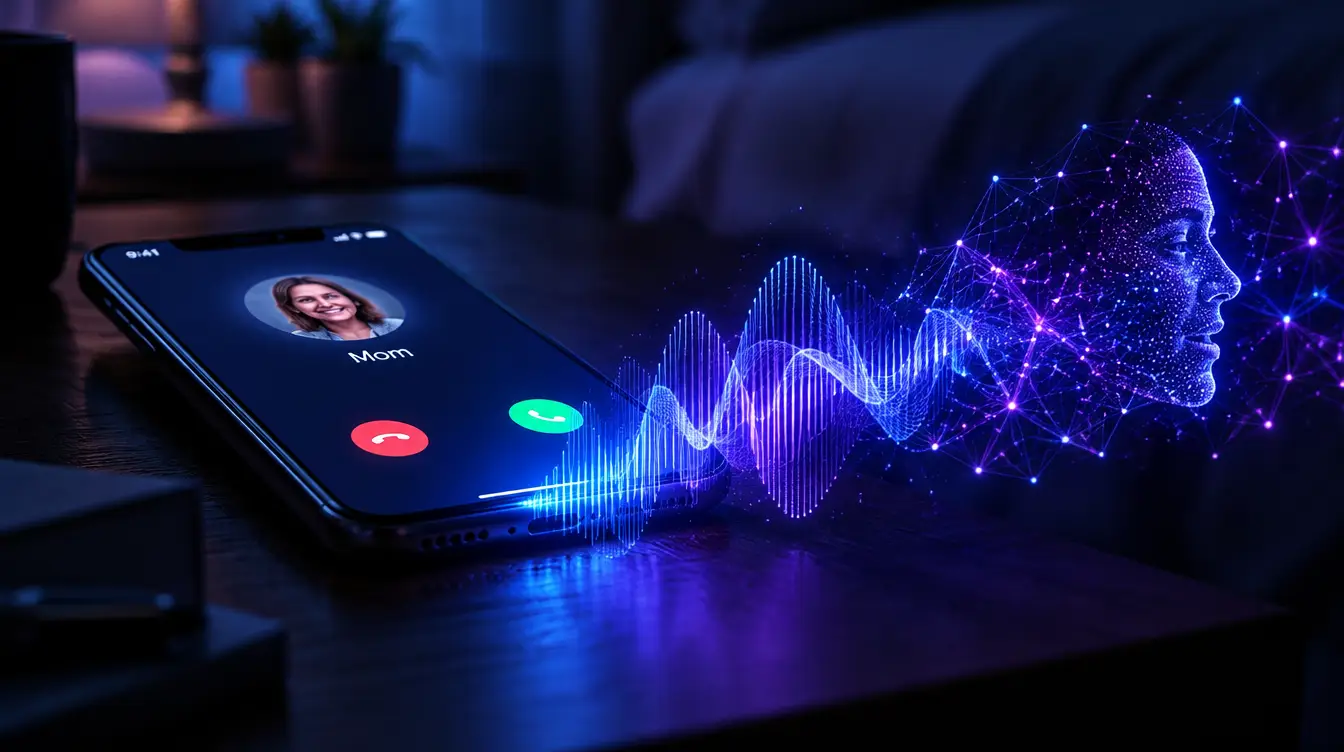
Fraud against older Americans hit $4.8 billion in reported losses in 2024, a 43 percent increase from the year before [1]. A growing share of those losses now involves AI-generated content: cloned voices, synthetic photos, and deepfake video calls designed to exploit trust. This is not a future problem. It is happening right now, and families are the first line of defense.
Why Older Adults Are Disproportionately Targeted
Scammers follow the money, and older adults hold a disproportionate share of liquid wealth. But the targeting goes deeper than finances.
Social isolation plays a major role. Adults over 65 who live alone are more likely to engage with unsolicited calls and messages simply because they receive fewer genuine ones [2]. A cloned voice that sounds like a grandchild or a video call that appears to show a family member creates an emotional urgency that overrides skepticism.
Digital unfamiliarity compounds the problem. Many older adults adopted smartphones and social media later in life. They may not know that a voice can be cloned from a three-second audio clip, or that a video call can show a face that does not belong to the person speaking.
Reluctance to report keeps the cycle going. The FBI estimates that only a fraction of elder fraud is reported, often because victims feel embarrassed or fear losing their independence [1].
The AI Tools Scammers Use
The barrier to creating convincing fakes has collapsed. Here is what scammers are deploying against older adults today:
The common thread across all four: each technique exploits a verification method that used to work. Voice recognition, face recognition, photo searches, and caller ID are all now unreliable on their own.
Real Patterns Families Should Know
The "Grandparent Scam" With AI
The classic grandparent scam has been around for decades. A caller pretends to be a grandchild in distress and asks for money. What has changed is the voice. AI cloning tools make the impersonation nearly perfect. In 2023, the FTC flagged a surge in these calls, noting that victims often described the voice as identical to their grandchild's [3].
Romance Scams With Synthetic Faces
Romance scams cost Americans over $1.3 billion in 2023 [4]. AI-generated profile photos make these schemes harder to detect. An older adult on a dating platform or Facebook group may build a relationship over weeks with someone whose face was generated by an algorithm. The photos will not appear in any reverse image search because they are entirely original creations.
Fake Investment Pitches From "Celebrities"
Deepfake videos of public figures endorsing investment schemes circulate on social media. Older adults who trust television personalities or financial commentators may not question a video that appears to show that person speaking directly to them.
What Families Can Do: A Practical Checklist
Prevention is a family project. Here are concrete steps that work.
1. Establish a Family Safe Word
Pick a word or phrase that only family members know. If anyone calls claiming to be a relative and asking for money or sensitive information, the safe word must be provided before any action is taken. Keep it offline. Do not text it or post it.
2. Set Up a Verification Protocol
Agree on a rule as a family: no money moves on the first call. If a family member calls with an urgent financial request, hang up and call them back on a number you already have stored. Do not use a number the caller provides.
3. Talk About What AI Can Do Now
Many older adults simply do not know that voices and faces can be faked convincingly. Have a direct, respectful conversation. Show examples. The goal is not to frighten but to update their mental model of what counts as proof.
What to say: "If someone calls and sounds exactly like me but asks you to send money or gift cards, it might not be me. Always hang up and call me back on my regular number."
4. Reduce the Raw Material Available to Scammers
AI voice cloning needs audio samples. Review what is publicly available:
- Voicemail greetings: Consider replacing personalized greetings with generic ones
- Social media videos: Limit public visibility of videos where family members speak
- Public profiles: Tighten privacy settings on Facebook, Instagram, and TikTok
5. Check Suspicious Content With Detection Tools
When an older family member receives a suspicious photo or video, it can be checked. Upload the file to a deepfake detection tool to see whether AI was involved. Run it through Witness at witness.vision/scan. Free, no account required. For a suspicious call or voice message, call the person back on a number you already know.
6. Set Up Trusted Contact Designations
Many banks and financial institutions now allow customers to designate a trusted contact person. This person is not given control over the account but can be notified if the institution detects unusual activity. Help your older family member set this up.
7. Report Everything
If a scam attempt occurs, report it even if no money was lost:
- FBI IC3: ic3.gov
- FTC: reportfraud.ftc.gov
- Local Adult Protective Services: for cases involving ongoing targeting
Reports help law enforcement track patterns and build cases. They also help other families.
Common Objections and How to Handle Them
Families often hit resistance when trying to discuss scam prevention with older relatives. Here are responses to the most common pushbacks.
Warning Signs a Scam May Already Be in Progress
Watch for these behavioral changes in older family members:
- Secrecy about new online relationships or reluctance to introduce a new "friend"
- Unusual financial activity: large withdrawals, wire transfers, or purchases of gift cards
- Receiving frequent calls or messages from unknown numbers
- Emotional volatility tied to communications with someone you have never met
- Reluctance to discuss finances when they were previously open about them
If you notice these signs, approach with empathy. Shame drives victims deeper into the scam. Frame the conversation around concern, not accusation.
The Technology Gap Is Closing, but Not Fast Enough
Detection tools are improving. Watermarking standards like C2PA and SynthID are being adopted by major platforms. But scammers do not use platforms that apply watermarks, and most synthetic content circulating in scam operations carries no provenance data at all.
This means the burden still falls on individuals and families. The most effective defense remains a combination of awareness, verification habits, and detection tools used together.
If you receive a photo or video that feels off, or if an older family member forwards you something suspicious, check it. Upload it to witness.vision/scan for a free analysis. For a voice message, verify through a second channel you trust. It takes seconds and requires no technical knowledge.
The best time to have the family conversation about AI scams is before the phone rings.
- [1]FBI Internet Crime Complaint Center, "2024 Elder Fraud Report," https://www.ic3.gov/AnnualReport/Reports/2024_IC3ElderFraudReport.pdf
- [2]National Council on Aging, "Social Isolation and Elder Fraud," https://www.ncoa.org/article/social-isolation-and-elder-fraud
- [3]Federal Trade Commission, "Scammers use AI to enhance their family emergency schemes," https://consumer.ftc.gov/consumer-alerts/2023/03/scammers-use-ai-enhance-their-family-emergency-schemes
- [4]Federal Trade Commission, "Romance scams cost consumers record $1.3 billion in 2023," https://www.ftc.gov/news-events/data-visualizations/data-spotlight/2024/02/romance-scammers-favorite-lies-exposed