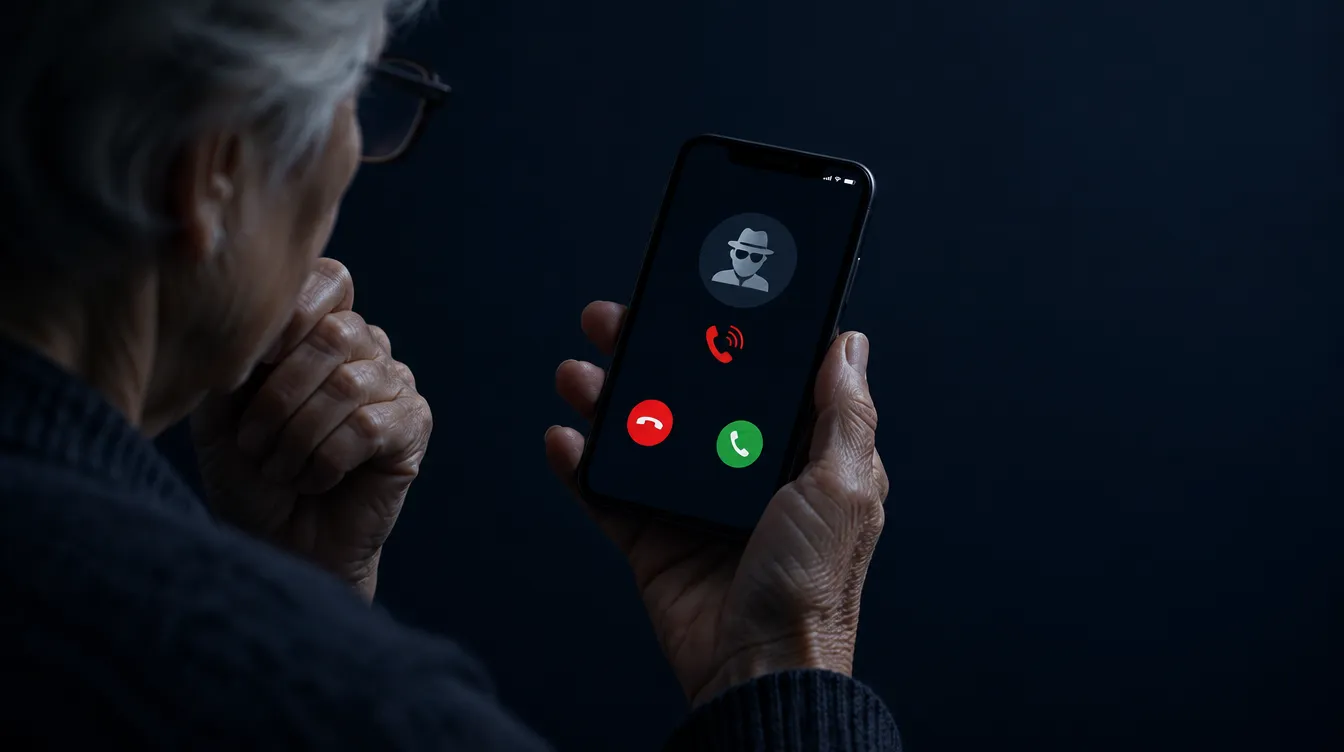
Voice Clone Scams: How to Protect Your Family
Voice clone scams use AI to replicate a loved one's voice. Learn how they work and how to protect your family with safe words and verification steps.
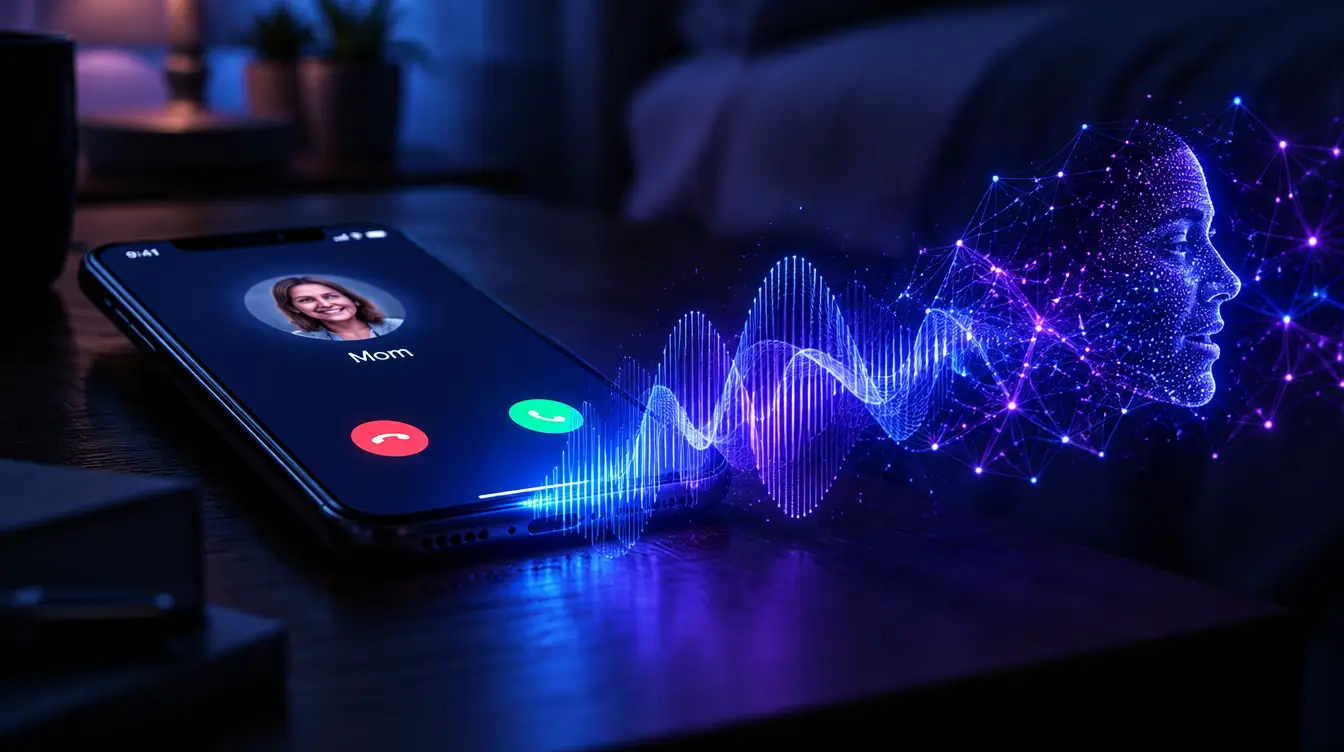
Three seconds of audio is all it takes. That is the amount of speech a modern AI system needs to produce a convincing voice clone of anyone, including your mother, your spouse, or your child. The technology that once required hours of studio recordings and specialist engineers is now available through free or low-cost apps, and criminals have noticed. In 2023, the FTC received reports of impostor scams costing Americans $2.7 billion, with phone calls remaining the top contact method for fraud [1]. A growing share of those calls now feature cloned voices designed to bypass the one security system most families still rely on: recognizing someone by how they sound.
What Is a Voice Clone?
A voice clone is a synthetic replica of a real person's voice, generated by an AI model trained on samples of that person's speech. The model learns the pitch, cadence, accent, and vocal quirks of the target, then produces new audio that says whatever the operator types or speaks.
Early voice cloning required 30 minutes or more of clean audio. Current commercial tools, including several that market themselves for podcasting and accessibility, can generate a passable clone from a clip as short as three seconds [2]. The output is not perfect in every case, but it does not need to be. Over a noisy phone line, with urgency and emotion in the mix, most listeners cannot tell the difference.
The barrier to entry is effectively zero. A scammer needs only a short clip from a social media video, a voicemail greeting, or a podcast appearance to build a usable voice clone.
How the Scam Works
Voice clone scams follow a predictable playbook. Understanding the steps makes them far easier to spot.
Step 1: Harvest Audio
Scammers pull audio from public sources. The most common:
- TikTok, Instagram, and YouTube videos
- Voicemail greetings
- Podcast or webinar appearances
- Phone calls where the target is tricked into speaking
Step 2: Clone the Voice
Using commercially available AI tools, the scammer feeds the audio sample into a voice cloning model. Within minutes, they have a system that can generate speech in the target's voice in real time or as pre-recorded clips.
Step 3: Place the Call
The scammer calls the victim, usually a family member of the person whose voice was cloned. Common scenarios include:
Step 4: Extract Payment
Victims are directed to pay via wire transfer, gift cards, cryptocurrency, or peer-to-peer apps. These methods are chosen because they are difficult or impossible to reverse.
A 2023 McAfee survey found that 77% of voice cloning scam victims lost money, with more than a third losing over $1,000 [3].
Why Families Are the Primary Target
Voice clone scams exploit the one thing families have in abundance: emotional connection. A stranger's voice asking for money is easy to dismiss. Your daughter's voice, sobbing and begging for help, is not.
Scammers also know that family members are less likely to verify before acting. The entire scheme depends on compressing the time between the call and the payment. Every second the victim spends thinking is a second closer to discovering the fraud.
Older adults are disproportionately affected. The FTC reports that people aged 60 and older lost more money to impostor scams than any other age group in 2023 [1]. But younger family members are not immune. Parents of teenagers and college students have reported receiving cloned-voice calls claiming their child was in danger.
How to Protect Your Family
Protection starts with preparation. The steps below are simple, free, and effective.
1. Establish a Family Safe Word
Choose a word or phrase that only your family knows. It should be:
- Uncommon enough that it would not appear in normal conversation or social media posts
- Easy to remember under stress
- Changed periodically, especially if it may have been shared with someone outside the family
If someone calls claiming to be a family member and cannot provide the safe word, hang up and call that person directly using a number you already have saved.
2. Verify Before You Act
No matter how convincing the voice sounds, take 60 seconds to verify.
- Hang up the call.
- Call the person directly on their known phone number.
- If you cannot reach them, call another family member who might know their whereabouts.
- Do not call back the number that contacted you.
A real emergency will still be a real emergency in 60 seconds. No legitimate situation requires you to send money within minutes of a phone call.
3. Limit Public Audio
Audit your family's social media presence. Every public video is a potential audio source for cloning.
- Set TikTok, Instagram, and Facebook accounts to private or friends-only
- Remove or restrict voicemail greetings that include extended speech
- Be cautious about voice recordings shared in public forums, school websites, or community groups
You do not need to disappear from the internet. But reducing the amount of easily accessible audio raises the difficulty for a scammer.
4. Educate Every Generation
Talk to your family about voice clone scams explicitly. Include:
- Older relatives who may trust phone calls implicitly
- Teenagers who may not realize their public videos are being harvested
- Children who should know never to provide personal information to an unexpected caller
A brief conversation at a family dinner can prevent thousands of dollars in losses.
5. Report Suspicious Calls
If you receive a suspected voice clone scam call:
- Report it to the FTC at ReportFraud.ftc.gov
- File a complaint with the FBI's IC3 at ic3.gov
- Contact your local police, especially if threats were made
- Notify your phone carrier, which may be able to flag the number
Reporting helps law enforcement track patterns and issue public warnings.
What Voice Clones Sound Like
Modern voice clones are disturbingly accurate over phone lines, which compress audio quality and mask artifacts. However, some signs can help:
- Unnatural pauses between sentences, as though the speaker is waiting for text input
- Flat emotional range, where the voice sounds upset but does not shift naturally through emotions
- Background silence, with none of the ambient noise you would expect from a real environment
- Repetition of scripted phrases without natural variation
These cues are subtle. They are not reliable enough to use as your sole defense. That is why verification protocols like safe words and callback procedures matter more than trying to detect the clone by ear.
Can AI Detect Voice Clones?
Yes. AI-based detection tools analyze audio for synthetic artifacts that human ears miss, including spectral patterns, micro-timing inconsistencies, and encoding signatures left by generation models.
If you receive a suspicious voicemail or audio message, do not rely on your ears. Call the person back on a number you already know, or ask for your family safe word. Witness checks images and video at witness.vision/scan. If a suspicious message arrives as a video, it can check the visuals, but not whether the voice is cloned.
Detection is not a replacement for the behavioral defenses listed above. It is an additional layer. The strongest protection combines skepticism, verification, and technology.
The Legal Landscape Is Catching Up
The FTC issued a final rule in 2024 specifically addressing AI-generated voice cloning in the context of government and business impersonation, expanding on existing telemarketing regulations [4]. Several U.S. states have introduced or passed legislation targeting synthetic media used for fraud.
But law enforcement consistently emphasizes that prevention is more effective than prosecution. Recovering money lost to voice clone scams is extremely difficult, particularly when payment was made via gift cards or cryptocurrency.
A Quick-Reference Checklist
Print this. Put it on the fridge. Share it in your family group chat.
- Agree on a family safe word today.
- If you get an urgent call from a "family member," hang up and call them back on their real number.
- Never send money based on a single phone call, no matter who it sounds like.
- Set social media accounts to private.
- Shorten or remove detailed voicemail greetings.
- Talk to older relatives about voice clone scams.
- Report suspicious calls to the FTC and FBI IC3.
- If you get a suspicious voice message, verify it through a second channel before you act.
The goal is not to live in fear. The goal is to make one brief preparation today so that a three-second audio clip cannot become a life-altering financial loss tomorrow.
- [1]Federal Trade Commission, "Consumer Sentinel Network Data Book 2023," https://www.ftc.gov/reports/consumer-sentinel-network-data-book-2023
- [2]Axios, "AI can clone your voice in 3 seconds," https://www.axios.com/2023/03/22/ai-voice-cloning-scams
- [3]McAfee, "The Artificial Imposter," May 2023, https://www.mcafee.com/blogs/privacy-identity-protection/artificial-imposters-cybercriminals-turn-to-ai-voice-cloning-for-a-new-breed-of-scam/
- [4]Federal Trade Commission, "FTC Finalizes Rule Banning Impersonation of Government and Businesses," April 2024, https://www.ftc.gov/news-events/news/press-releases/2024/04/ftc-finalizes-rule-banning-impersonation-government-businesses