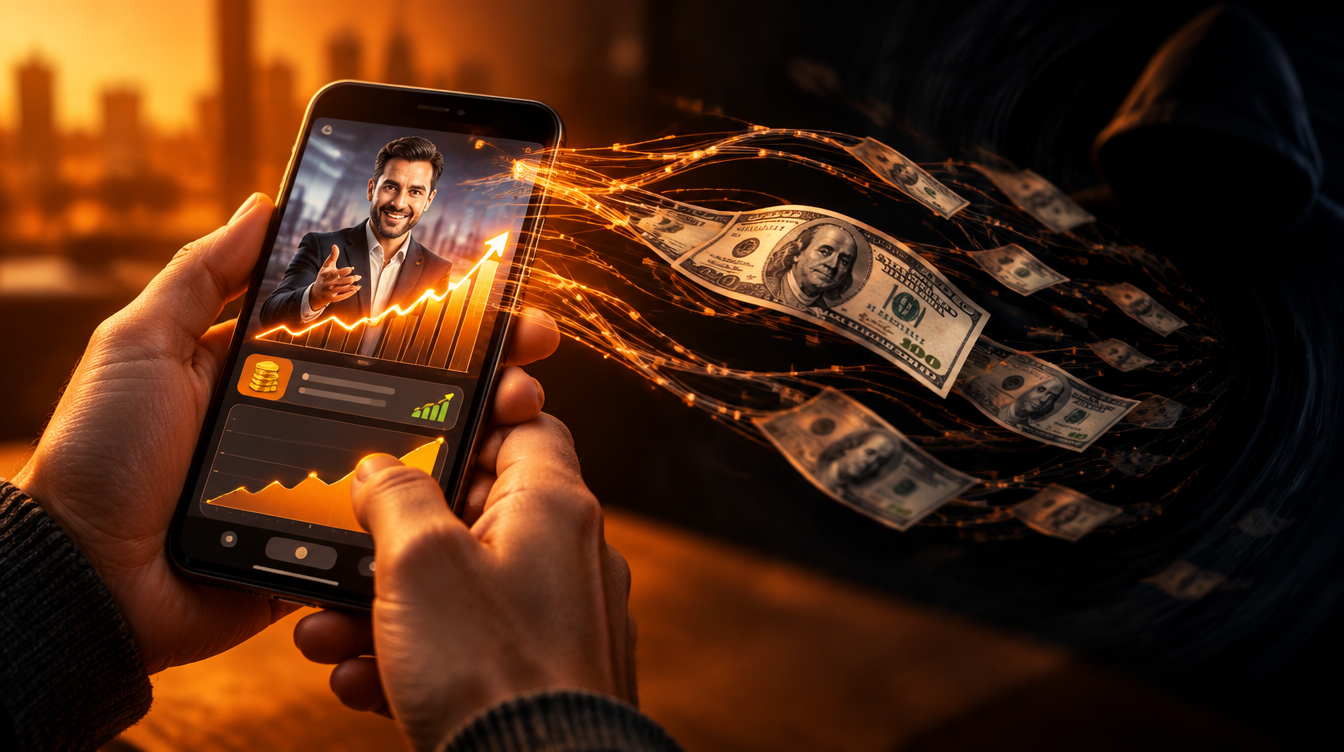
The Celebrity Crypto Endorsement You Saw Wasn't Real
Deepfake celebrity crypto scams stole over $5.6 billion in 2023 alone. How to spot fake Elon Musk, Taylor Swift, and celebrity endorsement videos before you lose money.
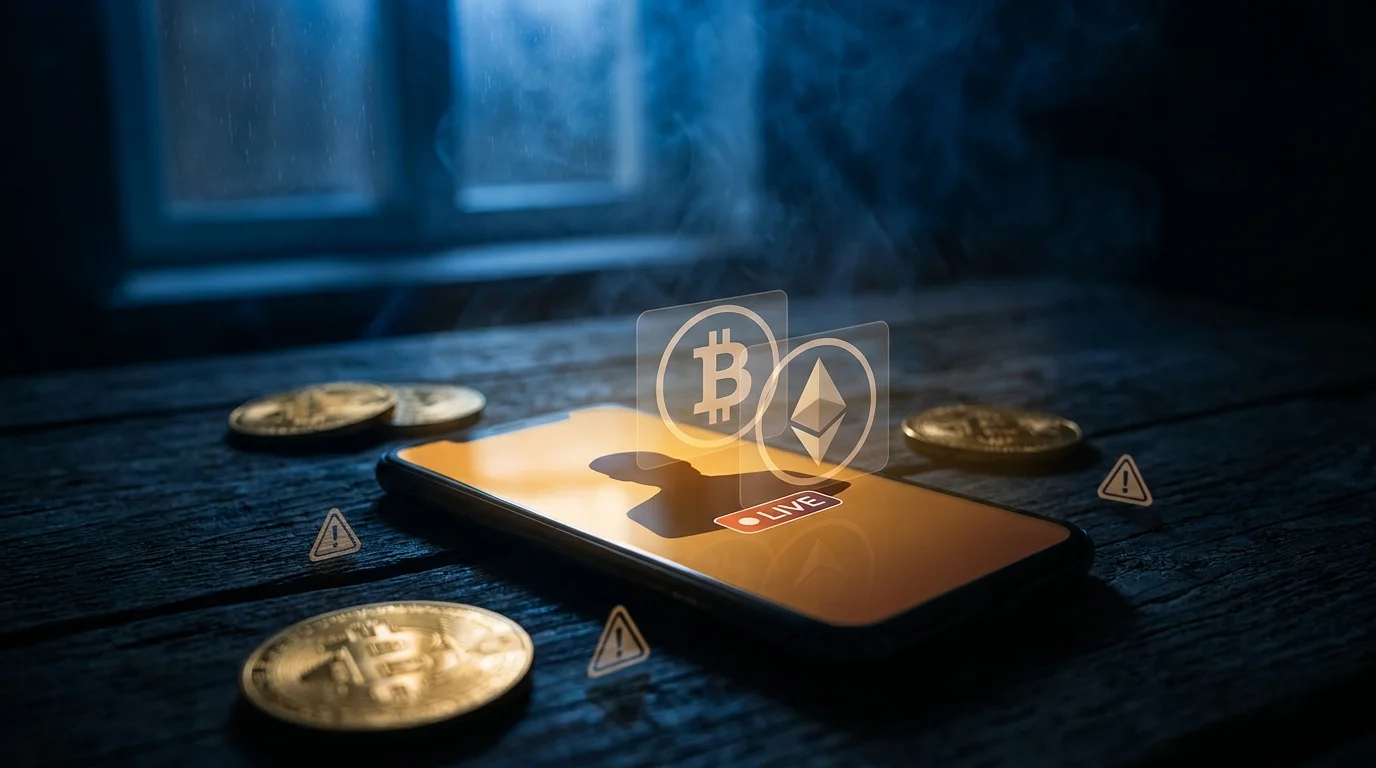
Fake celebrity crypto endorsements stole over $5.6 billion from Americans in 2023 alone, according to the FBI's Internet Crime Complaint Center [1]. The video of Elon Musk telling you to double your Bitcoin, the clip of Taylor Swift promoting a new token, the interview where Warren Buffett reverses his entire stance on cryptocurrency — none of it is real. These are deepfakes, and they are draining people's savings at an alarming rate.
Why Crypto Scams Love Famous Faces
Scammers use celebrity likenesses for one reason: trust transfer. You may not trust a random crypto platform, but you trust Elon Musk's track record with technology, or Oprah's judgment, or MrBeast's generosity. Scammers hijack that earned trust and redirect it toward a fraudulent scheme.
Cryptocurrency is the perfect vehicle for this fraud. Transactions are irreversible, largely anonymous, and difficult for law enforcement to trace. The FTC reported that crypto was the top payment method for investment fraud in 2023, with median individual losses of $3,800 [2].
The formula is simple: Familiar face + urgent opportunity + crypto payment = money you will never see again.
How These Deepfakes Actually Work
The production quality has gotten disturbingly good. Here is what a typical celebrity crypto scam looks like in practice:
The Livestream Hijack
Scammers create deepfake videos of celebrities and broadcast them as "live" streams on YouTube, X (Twitter), or TikTok. In January 2024, a deepfake livestream of Elon Musk ran on YouTube for hours, promoting a fake crypto giveaway. It attracted over 30,000 concurrent viewers before it was taken down [3].
The stream used real footage of Musk from interviews, with AI-generated voice cloning layered on top to deliver a new script about a "limited-time crypto opportunity."
The Fake Interview
Scammers take clips from real celebrity interviews, then use AI to swap out the audio. The lip movements are adjusted to match the new words. The result is a video that looks like a legitimate news segment where a celebrity endorses a specific token or platform.
The Social Media Ad
Shorter deepfake clips, sometimes just 15 to 30 seconds, run as paid advertisements on Facebook, Instagram, and TikTok. These are designed to look like personal messages from celebrities. Martin Lewis, a financial journalist in the UK, has been a frequent target, with his likeness used in thousands of fraudulent ads despite his repeated public warnings [4].
The Celebrities Most Frequently Targeted
Certain public figures appear in these scams far more often than others. The pattern is predictable:
These individuals have all publicly stated they have nothing to do with these promotions. Musk's likeness has been used so frequently that the phrase "Elon Musk crypto scam" has become one of the most searched fraud-related terms online.
How to Spot a Fake Celebrity Endorsement
You cannot rely on your eyes alone. Deepfake technology has improved to the point where casual viewing will not reveal the manipulation. But there are reliable signals that something is wrong.
Red Flags in the Content Itself
- It asks you to send crypto to "double" it. No legitimate investment works this way. Ever.
- There is a countdown timer or urgent deadline. Scammers manufacture pressure so you act before thinking.
- The platform or token is obscure. If a billionaire were really endorsing a cryptocurrency, it would be headline news everywhere, not just in a YouTube livestream or Instagram ad.
- The video is only available on one channel. Real celebrity statements appear across multiple verified outlets.
- Comments are disabled or heavily filtered. Scammers suppress warnings from other viewers.
Red Flags in the Distribution
- The YouTube channel hosting the "live" stream was created recently or has a history of unrelated content.
- The social media ad links to a website with no verifiable company information, no physical address, and no regulatory registration.
- The URL mimics a real brand but uses slight misspellings or unusual domain extensions.
Ask yourself one question: If this celebrity really made this announcement, why isn't every major news outlet covering it?
The Real Damage
These are not victimless crimes affecting only the careless. The FBI's 2023 cryptocurrency fraud report documented 69,468 complaints related to crypto investment fraud, with losses totaling $5.6 billion — a 45% increase from the prior year [1].
Victims include retirees, young investors making their first trades, and people in financial distress looking for a way out. The average victim does not consider themselves gullible. They saw a trusted face, heard a compelling pitch, and acted on it.
One widely reported case involved a British woman who lost her entire £76,000 pension after watching a deepfake video of Martin Lewis endorsing an investment platform [5]. The video looked completely real to her. She had followed Lewis's legitimate financial advice for years.
What the Platforms Are Doing (and Not Doing)
YouTube, Meta, and TikTok all have policies against deepfake content and crypto scams. Enforcement remains inconsistent.
YouTube took down the Elon Musk deepfake livestream in January 2024, but only after it had run for five hours and been viewed by tens of thousands [3]. Meta has removed millions of fraudulent ads but continues to face criticism for approving them in the first place. TikTok banned paid political deepfakes but has been slower to act on financial fraud deepfakes.
The fundamental problem is scale. These platforms process billions of pieces of content daily. Scammers create new accounts faster than old ones are banned. Automated detection catches some fakes, but the technology generating them is evolving just as quickly.
How to Protect Yourself
If you encounter a celebrity crypto endorsement online, run through this checklist before doing anything:
- Do not send money or crypto. Full stop. No matter how urgent the video makes it seem.
- Search for the endorsement on legitimate news sites. If Reuters, AP, Bloomberg, or the celebrity's verified social accounts have no mention of it, it is fake.
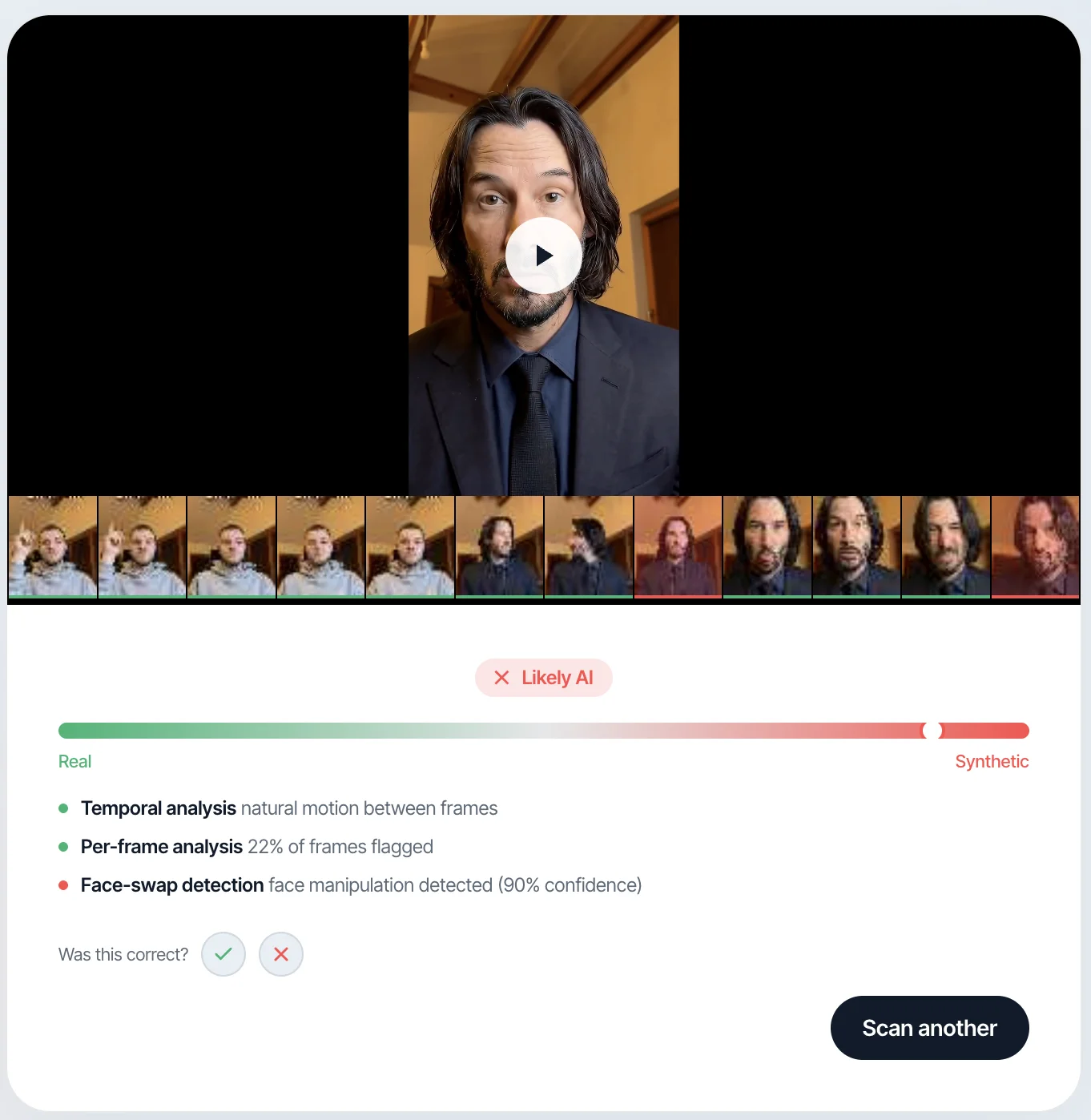
- Check the video for signs of AI generation. Upload it to a detection tool. Run it through Witness at witness.vision/scan — free, no account required.
- Report the content to the platform. Use the platform's report function for scams or misleading content. This helps get it removed before more people are harmed.
- If you already sent money, report it immediately. File a complaint with the FTC at ReportFraud.ftc.gov and with the FBI's IC3 at ic3.gov.
If a video is pressuring you to act fast, that is the single strongest signal that you should stop.
The Problem Is Getting Worse
Deepfake generation tools are cheaper, faster, and more accessible than they were even a year ago. The Deloitte Center for Financial Services projected that AI-generated content could enable up to $40 billion in fraud losses in the United States by 2027 [6].
Celebrity crypto scams are just one application. The same technology powers romance scams, business email compromise, and political disinformation. But the financial scam pipeline — famous face, fake opportunity, irreversible payment — remains one of the most profitable uses for fraudsters.
Your best defense is skepticism and verification. When you see a celebrity promoting something that sounds too good to be true, assume it is fabricated until you can confirm otherwise. And if you want to check whether a video or image is AI-generated, tools exist to help. Run it through Witness at witness.vision/scan — it takes less time than sending money you will never get back.
- [1]FBI Internet Crime Complaint Center, "2023 Cryptocurrency Fraud Report," https://www.ic3.gov/Media/PDF/AnnualReport/2023_IC3Report.pdf
- [2]Federal Trade Commission, "Data Spotlight: Investment Scams," https://www.ftc.gov/data
- [3]The Verge, "AI-generated Elon Musk crypto scam ran for hours on YouTube," https://www.theverge.com/2024/1/9/24031766/deepfake-elon-musk-youtube-crypto-scam
- [4]BBC News, "Martin Lewis deepfake scam ads still running on Facebook," https://www.bbc.com/news/technology-68177084
- [5]The Guardian, "British woman loses pension to deepfake Martin Lewis investment scam," https://www.theguardian.com/technology/2024/mar/deepfake-martin-lewis-scam
- [6]Deloitte Center for Financial Services, "The threat of AI-enabled fraud," https://www2.deloitte.com/us/en/insights/industry/financial-services/financial-services-industry-predictions/2024/deepfake-banking-fraud-risk-on-the-rise.html