AI Voice Clone Scam Costs Italy's Largest Bank 95 Million Euros
Fraudsters used AI voice cloning and WhatsApp impersonation to steal €95M from Intesa Sanpaolo's private banking division. The largest documented AI-enabled bank fraud to date.
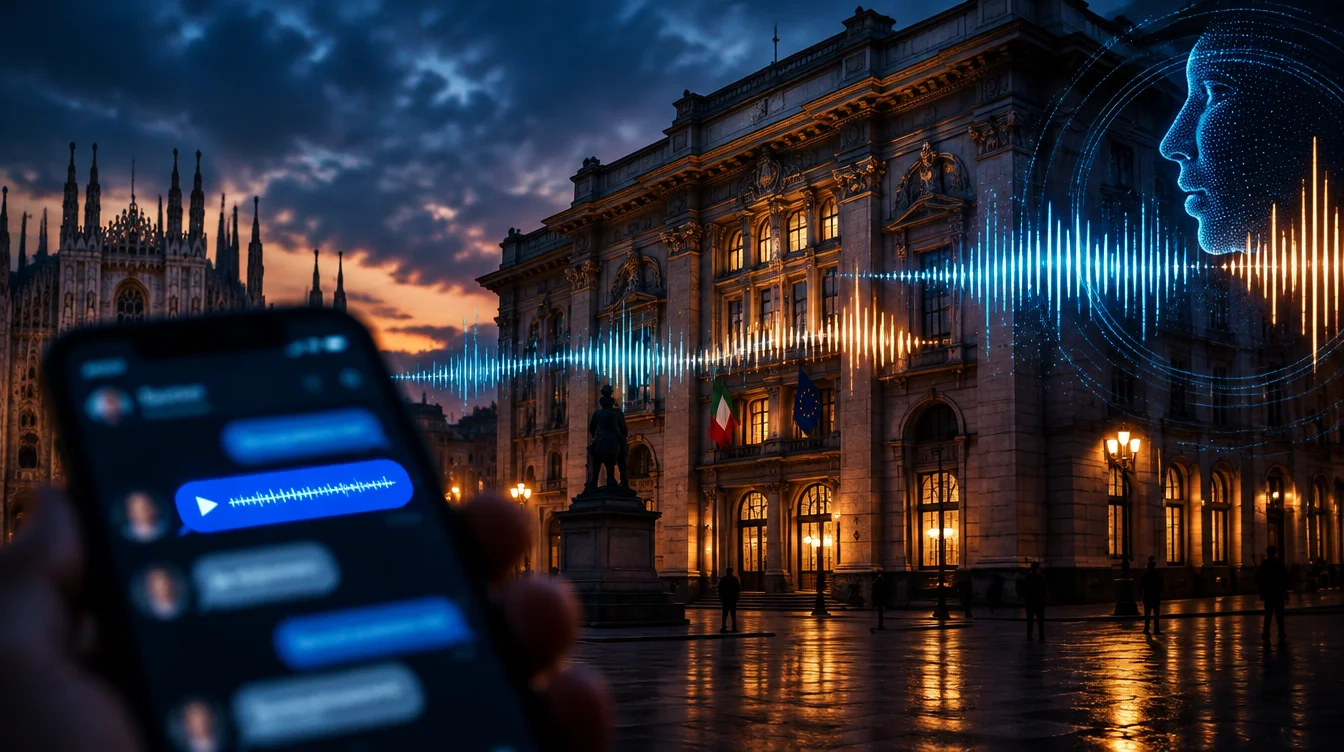
Fraudsters used AI voice cloning and WhatsApp impersonation to steal 95 million euros from Intesa Sanpaolo's private banking division Fideuram. Roughly 36 million euros remain unrecovered. The case is the largest documented AI-enabled bank fraud to date.
What Happened
In February 2026, Paolo Molesini, then chairman of Fideuram (Intesa Sanpaolo's private banking arm), received what appeared to be a WhatsApp message from Intesa Sanpaolo CEO Carlo Messina. The message requested urgent help with an overseas transaction.
A follow-up phone call appeared to come from a senior partner at a prominent law firm, confirming the instructions. The voice on the call was an AI clone. The scammers had replicated the lawyer's voice using AI technology, producing a call convincing enough to bypass the scrutiny of a senior banking executive.
Molesini authorized a series of transfers to accounts in China and Hong Kong. Fideuram detected irregularities and alerted authorities, but by that point 95 million euros had left the bank. Authorities in China, Portugal, and Italy cooperated to recover approximately 53 million euros. The remaining 36 million euros were converted to cryptocurrency and routed through overseas account networks, making recovery impossible.
Molesini resigned in March 2026, citing personal reasons. A foreign national living outside Europe has been placed under investigation for computer fraud. No Fideuram executives are under investigation.
Why This Case Matters
This is not a phishing email that tricked a junior employee. The target was the chairman of a major private bank. The impersonated figure was the CEO of Italy's largest banking group. The attack combined two AI techniques that are individually well-documented but devastatingly effective together:
WhatsApp impersonation. The initial contact came through a messaging platform where executive-to-executive communication is common. WhatsApp messages do not carry the verification infrastructure of corporate email. There is no sender authentication, no domain verification, no way to confirm the message actually came from the displayed contact.
AI voice cloning. The confirming phone call used a cloned voice. Modern voice cloning tools need as little as three seconds of sample audio to produce a convincing replica. For public figures like law firm partners who speak at conferences and appear in media, sample audio is freely available.
The combination is what made this work. The WhatsApp message established the request. The voice call confirmed it through what felt like an independent channel. The victim had two apparently separate confirmations from two trusted sources. Both were synthetic.
The Pattern Is Accelerating
The Intesa case follows a documented pattern of escalating AI-enabled financial fraud:
- January 2024: A Hong Kong finance worker transferred $25 million after a deepfake video call impersonating the company's CFO and colleagues.
- 2025: Italian businessman Massimo Moratti lost nearly 1 million euros to a similar AI voice cloning scam. The funds were later recovered.
- 2025-2026: Documented global losses from deepfake-enabled fraud exceeded $3.7 billion, with 89% recorded in the most recent 18 months.
- February 2026: The Intesa Sanpaolo case. 95 million euros. Single attack, single victim, two AI techniques.
The losses are getting larger. The targets are getting more senior. The attacks require less technical sophistication to execute.
What Organizations Should Do
Establish out-of-band verification for high-value transactions. Any transfer above a threshold amount should require confirmation through a pre-agreed channel that was not initiated by the requestor. If someone calls you to authorize a transfer, hang up and call them back on a number you already have on file.
Treat WhatsApp and messaging apps as unverified channels. Executive communications through messaging platforms should never be the basis for financial authorization. Messaging apps provide no sender authentication.
Implement voice verification protocols. For calls authorizing significant actions, use a pre-agreed passphrase or callback procedure. A cloned voice can replicate tone and speech patterns, but it cannot produce a passphrase that was never shared digitally.
Brief senior executives specifically. The Intesa case demonstrates that seniority provides no protection. Senior executives are higher-value targets with greater authorization authority. They need specific training on AI-enabled social engineering.
What Individuals Should Do
The same techniques used against a bank chairman are being used against individuals at smaller scale. AI voice cloning scams targeting families and individuals follow identical patterns: urgent request, trusted voice, time pressure.
Establish a family safe word. A code word agreed in person that must be spoken in any urgent financial request. If someone calls claiming to be a family member in distress, ask for the safe word.
Verify independently. If you receive an urgent request for money from anyone, hang up and call them directly on a number you already have. Do not use a number provided in the suspicious message.
Be suspicious of urgency. Every AI-enabled scam relies on time pressure to prevent verification. Legitimate urgent requests can wait two minutes for a callback.
Verify What You See and Hear
AI voice clones and deepfake videos are increasingly indistinguishable from real communications. Detection tools can help identify AI-generated content before you act on it. Upload suspicious images or video frames at witness.vision/scan to check whether they were AI-generated. The Witness Chrome extension scans images directly on any webpage.
Scan now at witness.vision/scan
- [1]Reuters and Corriere della Sera, September 25, 2026. Original reporting on the Intesa Sanpaolo/Fideuram fraud.