They Asked for Money. Here's What to Do Before You Send It.
A five-minute checklist before sending money to someone you met online. Romance scam warning signs, AI-generated profile detection, and verification steps that work.
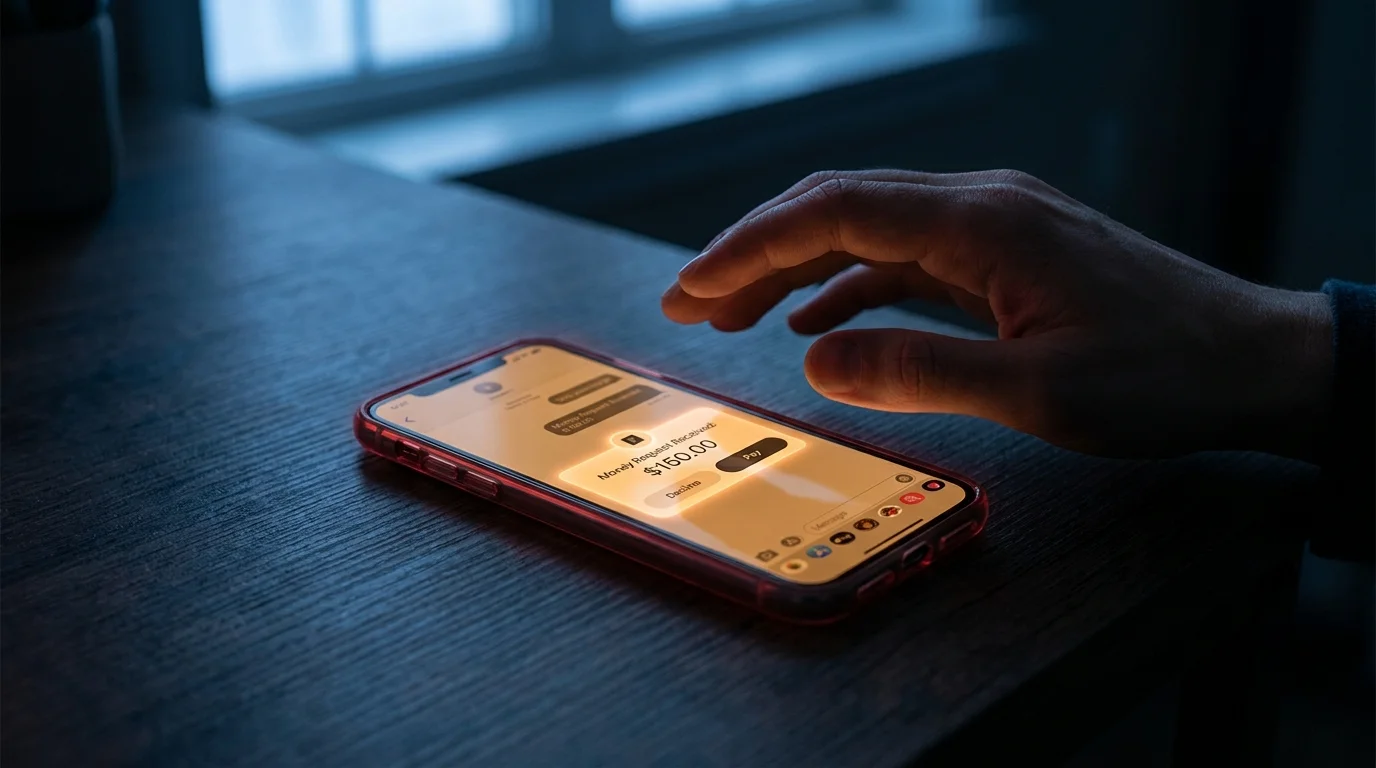
Someone you've been talking to online just asked you for money. Maybe it's for a medical emergency. Maybe a plane ticket to finally meet you. Maybe a short-term business problem they'll pay back next week. Your instinct is to help. This article exists to slow that instinct down by exactly five minutes, because those five minutes could save you thousands of dollars.
The Scale of What's Happening
In 2023, Americans reported losing $1.14 billion to romance scams, making it the costliest form of fraud reported to the FTC [1]. The median individual loss was $2,000, but tens of thousands of people lost far more.
These numbers only capture what gets reported. The FBI estimates the true figure is significantly higher, because many victims never file a complaint out of shame [2].
The person asking you for money may be real. They may also be a carefully constructed fiction: a stolen identity, a set of AI-generated photos, a voice cloned from a YouTube video. The request for money is the moment all of that preparation was designed to reach.
The ask is the goal. Everything before it — the weeks of conversation, the emotional intimacy, the future plans — exists to make this moment feel natural.
The Five-Minute Checklist Before Sending Anything
If someone you've met online asks for money, pause. Run through every item below before you do anything else.
1. Ask yourself: have we ever met in person?
If the answer is no, that single fact should carry enormous weight. According to the FTC, the majority of romance scam victims have never met their scammer face-to-face [1]. The entire relationship may have existed only through text, calls, and photos.
Not having met doesn't automatically mean the person is fake. But it means you have less verification than you think.
2. Check every photo and video they've sent you
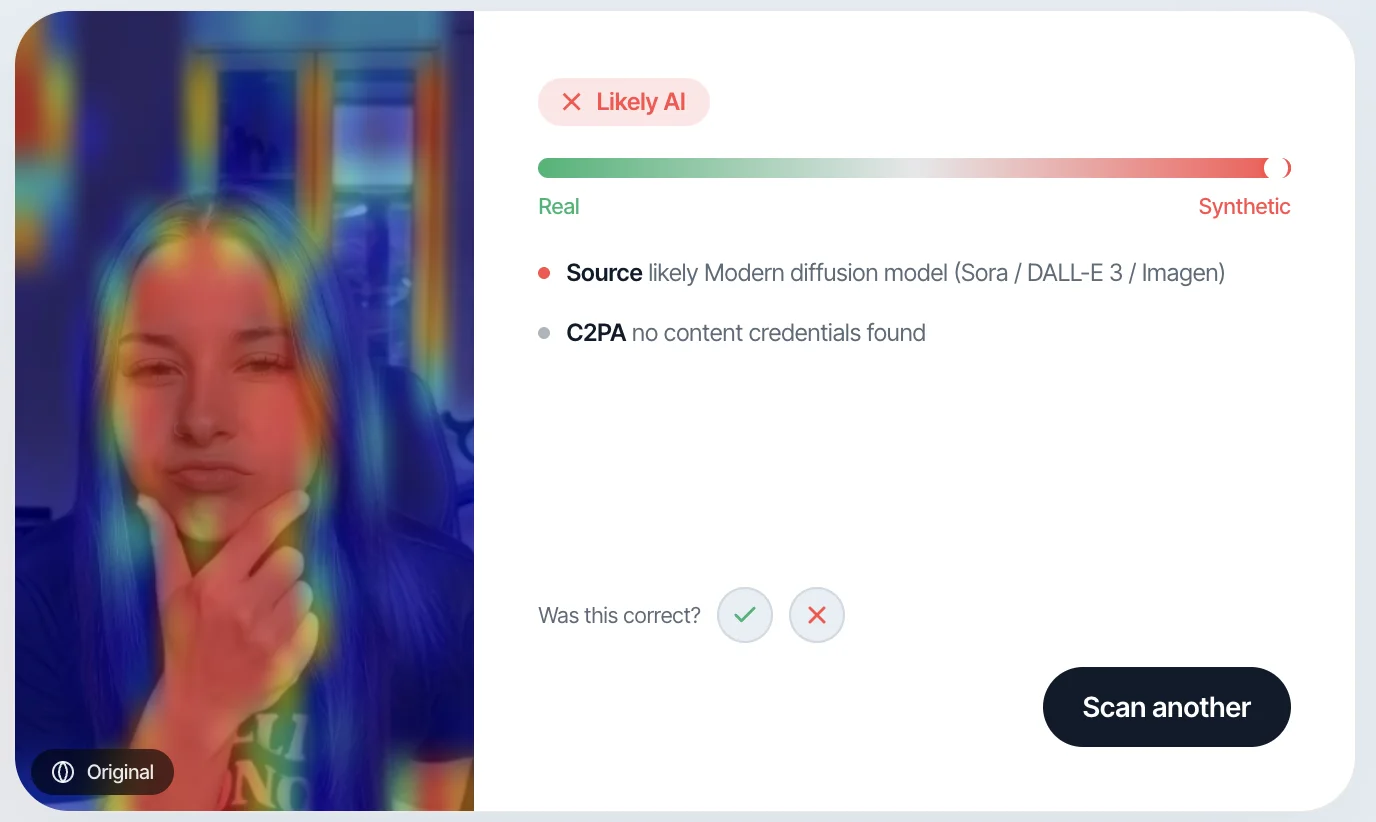
AI-generated profile photos are now good enough to fool most people. But detection tools can catch what eyes miss.
Take every image and video this person has sent you and run it through a detection scan. This includes:
- Profile photos
- Selfies sent in messages
- Video call screenshots (if you have them)
- Any photo of documents they've shared (IDs, hospital bills, boarding passes)
Run them through Witness at witness.vision/scan — free, no account required.
If the scan flags AI-generated or manipulated content, you have your answer.
3. Reverse-image search their photos
Even if a photo isn't AI-generated, it may be stolen from someone else's social media. Use Google Images or TinEye to check whether the photo appears elsewhere online, attached to a different name or profile.
If their photo belongs to a fitness influencer in São Paulo or a military officer's public profile, you're talking to neither of those people.
4. Examine the money request itself
Scammers follow patterns. Look at the request and check it against known tactics:
If even one of these is present, treat it as a serious warning sign. If multiple are present, stop all money transfers immediately.
5. Call someone you trust
This step is the one scammers work hardest to prevent. They isolate victims emotionally. They create a private world where only the two of you understand the situation.
Break that seal. Call a friend, a sibling, a coworker. Describe the situation factually:
- "I've been talking to someone online for three months."
- "We've never met in person."
- "They're asking me to send $3,000 for a medical bill."
Listen to the reaction. If the person you trust is alarmed, pay attention.
Why the Payment Method Matters
Scammers almost never ask for payment through traceable, reversible channels. They avoid standard bank transfers and credit card payments because those can be disputed and clawed back.
Instead, they ask for:
- Gift cards (iTunes, Google Play, Steam, Amazon)
- Wire transfers (Western Union, MoneyGram)
- Cryptocurrency (Bitcoin, USDT)
- Payment apps sent to unfamiliar accounts
There's a reason the FTC explicitly states that anyone who asks you to pay with gift cards is a scammer [3]. No legitimate person in a genuine emergency needs you to read them the numbers off the back of a Steam card.
Legitimate emergencies have legitimate solutions. Hospitals offer payment plans. Airlines accept credit cards. Embassies assist stranded citizens. If the only solution to their problem is your money through an untraceable channel, the problem is fabricated.
What If You've Already Sent Money?
If you've already transferred funds, act quickly:
- Contact your bank or payment provider immediately. Some transfers can be reversed if reported fast enough. Credit card charges can be disputed. Wire transfers are harder but not always impossible.
- Stop all further payments. Scammers will always ask for more. The medical bill becomes a legal fee. The plane ticket becomes a customs charge. There is no final payment.
- Report it. File a complaint with the FTC at ReportFraud.ftc.gov and with the FBI's Internet Crime Complaint Center at ic3.gov. These reports help law enforcement track networks and warn others.
- Document everything. Save all messages, photos, transaction receipts, and account details. Screenshot conversations before the scammer can delete them.
- Don't blame yourself. Romance scams are sophisticated, psychologically engineered operations. Many are run by organized criminal networks. Victims include doctors, engineers, retired law enforcement officers. Intelligence doesn't protect against emotional manipulation.
The Role of AI in Modern Romance Scams
The mechanics of this crime have changed in the last two years. Scammers now have access to tools that didn't exist before:
- AI photo generators create faces that belong to no real person. There's no one to reverse-image search because the person never existed.
- Voice cloning lets scammers replicate someone's speech patterns from a few seconds of audio. That phone call or voice note may not prove what you think it proves.
- Real-time deepfake video can make a live video call appear to show someone who isn't there. A 2024 case in Hong Kong saw a finance worker transfer $25 million after a video call with what appeared to be his CFO — every person on the call was a deepfake [4].
These tools mean that "I've seen them on video" is no longer reliable proof that someone is who they claim to be. The verification bar has risen, and most people don't know it yet.
This is exactly why running photos and videos through a detection tool matters. Your eyes are working with outdated assumptions about what "looks real." Detection algorithms are not.
A Simple Decision Framework
When someone you've met online asks for money, ask yourself three questions:
- Have I verified this person's identity through means they don't control? (Not photos they sent you. Not video calls they initiated. Independent verification.)
- Would I describe this situation to a friend without feeling embarrassed or defensive? If you'd hedge or minimize, that's a signal.
- Is the payment method traceable and reversible? If not, ask yourself why.
If you can't answer yes to all three, do not send money. The cost of being wrong about a real person is a delayed favor. The cost of being wrong about a scammer is real financial and emotional damage.
One More Thing You Can Do Right Now
If you're reading this because someone has asked you for money, take the photos they've sent you — all of them — and check whether they're AI-generated. It takes less than a minute and costs nothing.
Run them through Witness at witness.vision/scan — free, no account required.
It won't tell you everything about a person's character. But it will tell you whether the face you've been looking at was built by an algorithm. And that's worth knowing before you open your wallet.
- [1]Federal Trade Commission, "Romance scammers' favorite lies exposed," February 2024, https://www.ftc.gov/news-events/data-visualizations/data-spotlight/2024/02/romance-scammers-favorite-lies-exposed
- [2]FBI Internet Crime Complaint Center, "2023 Internet Crime Report," https://www.ic3.gov/AnnualReport/Reports/2023_IC3Report.pdf
- [3]Federal Trade Commission, "Gift Card Scams," https://consumer.ftc.gov/articles/gift-card-scams
- [4]CNN, "Finance worker pays out $25 million after video call with deepfake 'chief financial officer'," February 2024, https://www.cnn.com/2024/02/04/asia/deepfake-cfo-scam-hong-kong-intl-hnk/index.html