AI Scams Targeting Older Adults: What Family Can Do (2026)
AI voice clones, deepfake video calls, and AI-generated messages are targeting older adults. A practical guide for families on grandparent scams, elder fraud, and how to protect your loved ones.

Fraud against Americans aged 60 and older hit $3.4 billion in reported losses in 2023, a 11% increase from the year before [1]. What the FBI's numbers don't capture is how many of those scams now use AI-generated voices, faces, and videos to be more convincing than anything a con artist could pull off alone. Older adults aren't falling for these scams because they're gullible. They're falling for them because the fakes are genuinely hard to detect.
This post is for the adult children, grandchildren, nieces, nephews, and caregivers who want to help. Not by lecturing. By understanding how these scams actually work and having practical conversations about them.
Why Scammers Target Older Adults Specifically
It isn't random. Older adults are targeted for structural reasons that have nothing to do with intelligence.
None of these are weaknesses. They are ordinary traits that scammers have learned to exploit.
The Three AI Scam Types Hitting Older Adults Hardest
1. AI Voice Cloning ("Grandparent Scams" 2.0)
The classic grandparent scam (someone calls pretending to be a grandchild in trouble) has been around for decades. AI has made it devastatingly effective.
With as little as three seconds of audio scraped from a social media post, AI tools can clone a voice well enough to fool a parent or grandparent [3]. The caller sounds exactly like the person they're impersonating. They'll say they've been in a car accident, arrested, or are stranded. They'll beg for money and plead with the victim not to tell anyone else in the family.
This is no longer a bad impression. A cloned voice carries the same tone, cadence, and speech patterns as the real person. Victims report being absolutely certain it was their grandchild.
In 2023, the FTC received reports of impersonation scams totaling $2.7 billion in losses across all age groups, with phone calls being the most costly contact method [4].
2. AI-Generated Romance and Companion Scams
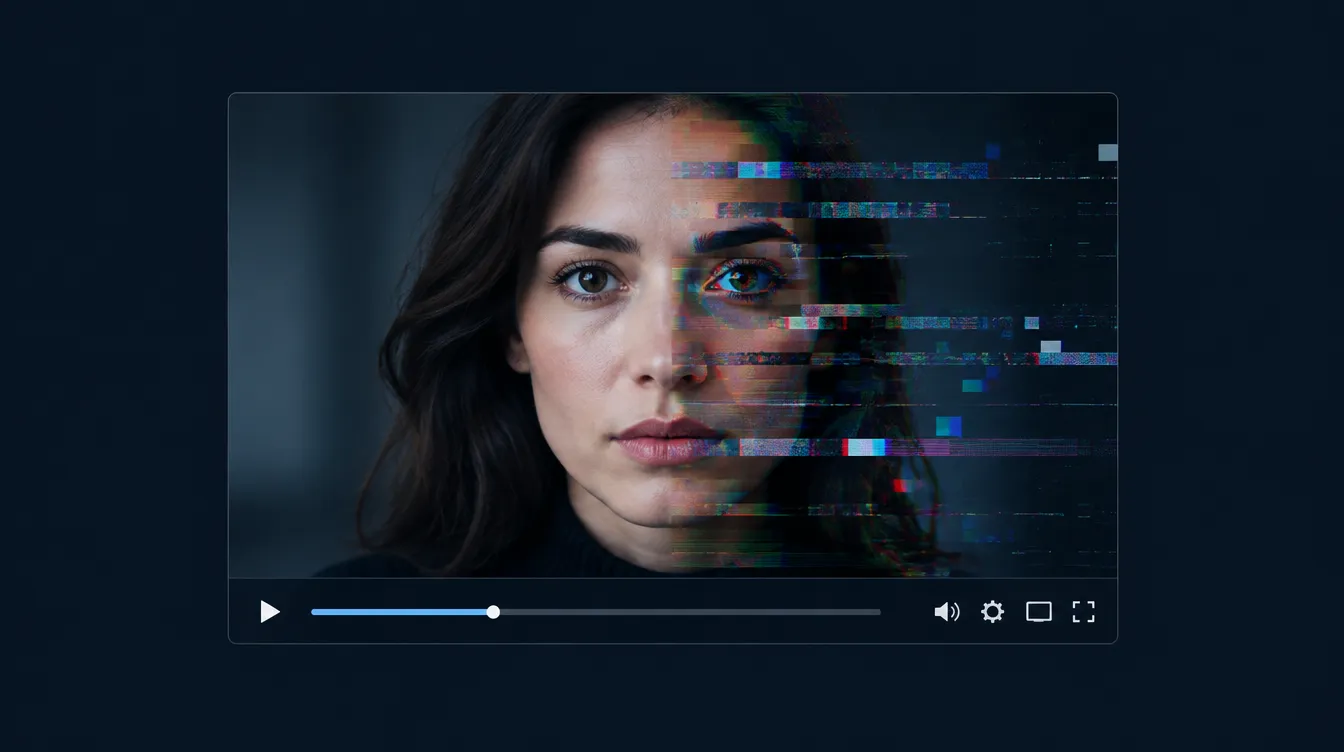
Widowed and divorced older adults are prime targets for romance scams. AI has added new layers: scammers now use AI-generated profile photos that don't belong to any real person, AI-written messages that maintain consistent personality over weeks, and even real-time deepfake video calls.
The victim believes they're seeing and hearing the person they've been talking to. They are seeing a synthetic face puppeted by a scammer.
Adults 60+ reported $356 million in romance scam losses in 2023, making it one of the costliest fraud categories for this age group [1].
3. Fake Authority Figures
Scammers pose as bank fraud departments, Social Security Administration agents, IRS officers, or tech support. AI makes these calls sound more professional and legitimate. Some scams now use deepfake video calls where a "bank manager" appears on screen to walk the victim through a wire transfer.
These scams leverage the trust older adults place in institutions. When a caller ID shows a bank's number (spoofed) and the voice sounds professional (AI-generated), the manipulation is layered.
What Makes These Scams Hard to Resist
Understanding the mechanics helps families have better conversations.
- Urgency. Every AI scam creates time pressure. "Don't hang up." "You need to act now." "If you call anyone else, I'll be in more trouble." Urgency overrides critical thinking at any age.
- Emotional hijacking. A grandchild's cloned voice crying triggers a physiological response. The victim's brain shifts into protection mode, not analysis mode.
- Isolation tactics. Scammers explicitly tell victims not to contact other family members, often with a plausible-sounding reason.
- Technological believability. When the face looks real, the voice sounds real, and the story is emotionally coherent, there's no obvious red flag to catch.
The problem is not that older adults can't think critically. The problem is that AI-generated content removes the cues that would normally trigger suspicion.
What Family Members Can Do
Have the Conversation Early and Without Judgment
The single most protective step is a direct, non-condescending conversation. Not "be careful online, Mom." Something like:
"There's new technology that can copy someone's voice perfectly from a short clip. If you ever get a call from me or [grandchild] saying we're in an emergency, hang up and call us back on a number you already have saved. Even if it sounds exactly like us."
This frames the threat as a technology problem, not a trust problem.
Establish a Family Verification System
Create a simple protocol for emergency calls:
- Pick a code word that only family members know. If someone calls claiming to be a relative in trouble, ask for the code word.
- Agree on a rule: always hang up and call back using a saved contact number, never the number that called you.
- Normalize verification. Make it clear that verifying is not a sign of distrust. It's the smart thing to do.
Reduce Voice and Video Exposure
Scammers clone voices from public content. A few practical steps:
- Set social media accounts for older family members (and younger ones whose voices could be cloned) to private
- Avoid posting voicemail greetings that include extended speech
- Be selective about video content posted publicly
Help Them Check Suspicious Content
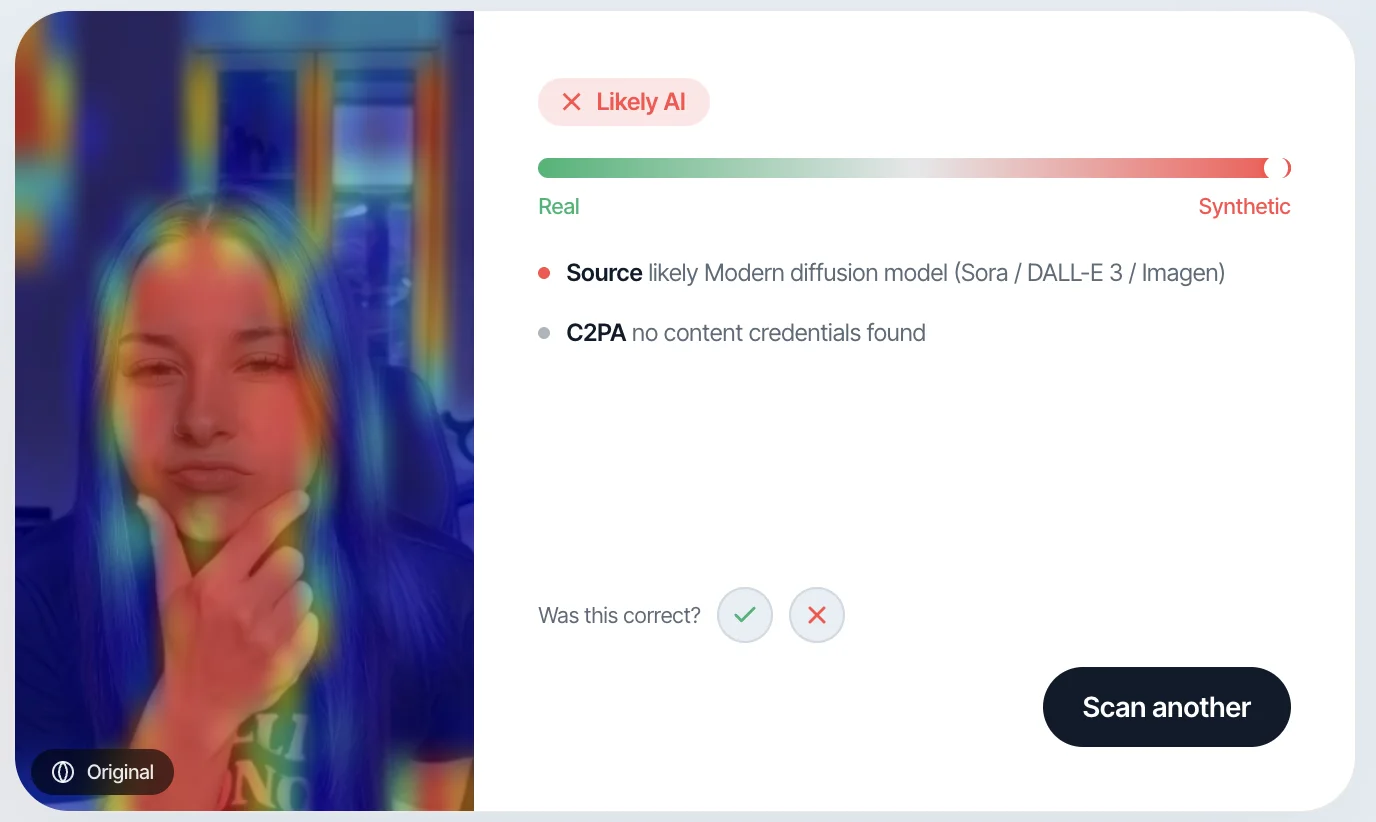
When an older family member receives a suspicious photo, video, or voice message, they need somewhere to turn. Bookmark witness.vision/scan on their phone or computer. Show them how to upload an image or video to check whether it was AI-generated. It's free, requires no account, and gives a clear result.
The goal is to give them a tool they can use independently, without needing to call you every time.
Watch for Warning Signs
Sometimes you won't know about a scam until it's in progress. Watch for:
- Sudden secrecy about finances or phone calls
- Mentions of a new online friend or romantic interest
- Unusual bank withdrawals or requests for gift cards
- Reluctance to discuss who they've been talking to
- New apps or software installed on their devices
If a Scam Has Already Happened
Speed matters. Here's what to do:
- Don't blame them. Shame keeps victims silent and makes recovery harder.
- Contact the bank immediately. Some wire transfers can be reversed within 24-72 hours.
- File a report with the FBI's IC3 at ic3.gov. Also report to the FTC at reportfraud.ftc.gov.
- Contact Adult Protective Services if the victim is vulnerable or the scam is ongoing.
- Document everything. Save messages, call logs, screenshots, and any media files received. If you have images or videos from the scammer, run them through Witness at witness.vision/scan. Free, no account required. Detection results can support fraud reports.
There is no shame in being scammed by AI. These tools are designed to fool everyone. Researchers have shown that even trained professionals struggle to distinguish AI-generated voices from real ones [5].
A Note About Respect
Older adults deserve autonomy. The goal here isn't to take over their devices or monitor their calls. It's to give them the same information younger people absorb through social media and tech news, and to create a family culture where verifying isn't embarrassing.
The best protection isn't surveillance. It's a 10-minute conversation and a code word.
If you want to start that conversation today, send this article to your family group chat. And bookmark the free scan at witness.vision/scan so everyone knows where to check when something looks off.
- [1]FBI Internet Crime Complaint Center, "2023 Elder Fraud Report," https://www.ic3.gov/Media/PDF/AnnualReport/2023_IC3ElderFraudReport.pdf
- [2]Administration for Community Living, "2023 Profile of Older Americans," https://acl.gov/aging-and-disability-in-america/data-and-research/profile-older-americans
- [3]McAfee, "Beware the Artificial Impostor: McAfee Survey Reveals Global AI Voice Cloning Threat," 2023, https://www.mcafee.com/blogs/privacy-identity-protection/artificial-impostor/
- [4]Federal Trade Commission, "FTC Data Shows Record $2.7 Billion Lost to Impersonation Scams in 2023," https://www.ftc.gov/news-events/data-visualizations/data-spotlight/2024/04/impersonation-scams
- [5]University College London, "People cannot distinguish AI-generated speech from real speech," 2023, https://www.ucl.ac.uk/news/2023/jul/people-cannot-distinguish-ai-generated-speech-real-speech