Romance Scam Red Flags That Actually Matter in 2026
The red flags that actually catch romance scammers in 2026. Deepfake video tells, AI-generated profile photos, voice clone detection, and what to do if you suspect a scam.
Romance scams cost Americans over $1.3 billion in reported losses in 2023 alone, and that number only captures people willing to tell the FTC what happened [1]. The real figure is almost certainly several times higher. What makes 2026 different from five years ago is not the psychology behind these scams. It is the tools scammers now use to make every red flag harder to spot.
The Old Red Flags Are Not Wrong. They Are Just Incomplete.
You have probably seen lists telling you to watch out for someone who refuses to video call, uses stock photos, or writes in broken English. That advice was solid in 2019. It is dangerously incomplete now.
Today's romance scammers use real-time deepfake video on live calls. They generate unique, never-before-seen profile photos with AI. They run their messages through large language models that produce fluent, emotionally nuanced English, Spanish, Mandarin, or whatever language the target speaks.
The old checklist assumed scammers lacked resources. That assumption no longer holds.
Red Flags That Still Matter
Some signals remain reliable because they are rooted in the scammer's goals, not their technology. No matter how good the tools get, the scam still needs to extract money, personal data, or both.
1. The relationship accelerates faster than real life allows
Scammers operate on volume. They cannot spend months slowly building trust with dozens of targets simultaneously. The phrase researchers use is love bombing: intense affection, declarations of love, and talk of a shared future within days or weeks.
If someone you have never met in person says "I love you" within the first two weeks, treat it as a signal, not a compliment.
2. There is always a reason you cannot meet
The excuse has evolved. It used to be a military deployment or an oil rig. Now it might be a remote research station, a medical volunteering stint, or a job in a country with restricted travel. The specific story does not matter. What matters is the pattern: every plan to meet gets derailed.
3. A financial ask appears, no matter how small
The FBI's Internet Crime Complaint Center documented that romance scams frequently start with small, reasonable-sounding requests before escalating [2]. A $50 gift card "for data while traveling." A phone bill payment. Crypto "investment advice." The first ask tests whether you will comply. The amounts grow from there.
4. They steer you off the dating platform quickly
Dating platforms have fraud detection systems. Scammers know this. Moving to WhatsApp, Telegram, or SMS within the first few messages removes the platform's ability to flag suspicious behavior and eliminates your ability to report the account easily later.
5. Their story has details you cannot verify independently
A real person leaves traces. Employment records, social media history spanning years, mutual connections, tagged photos from friends. A fabricated identity, no matter how polished, tends to exist only in the channels the scammer controls.
The New Red Flags for 2026
These are the signals that did not exist or did not matter five years ago.
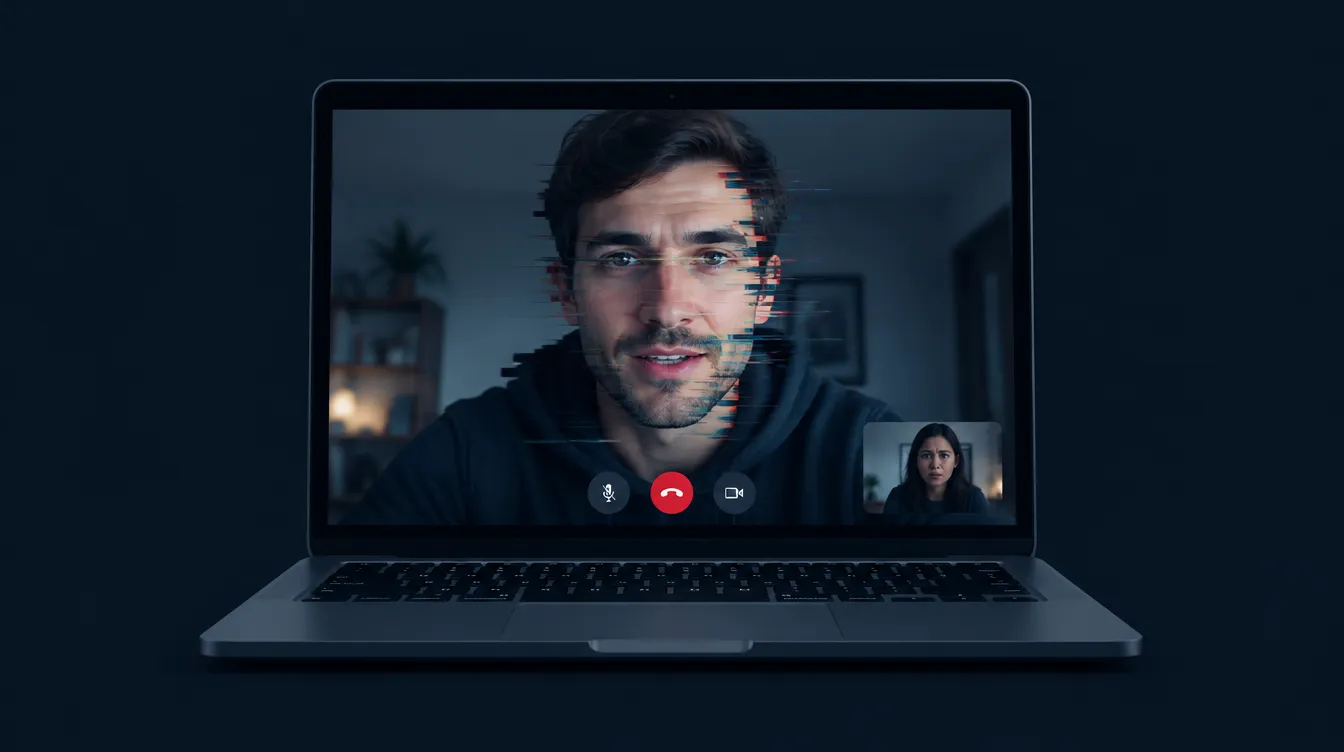
6. Video calls feel slightly off but you cannot say why
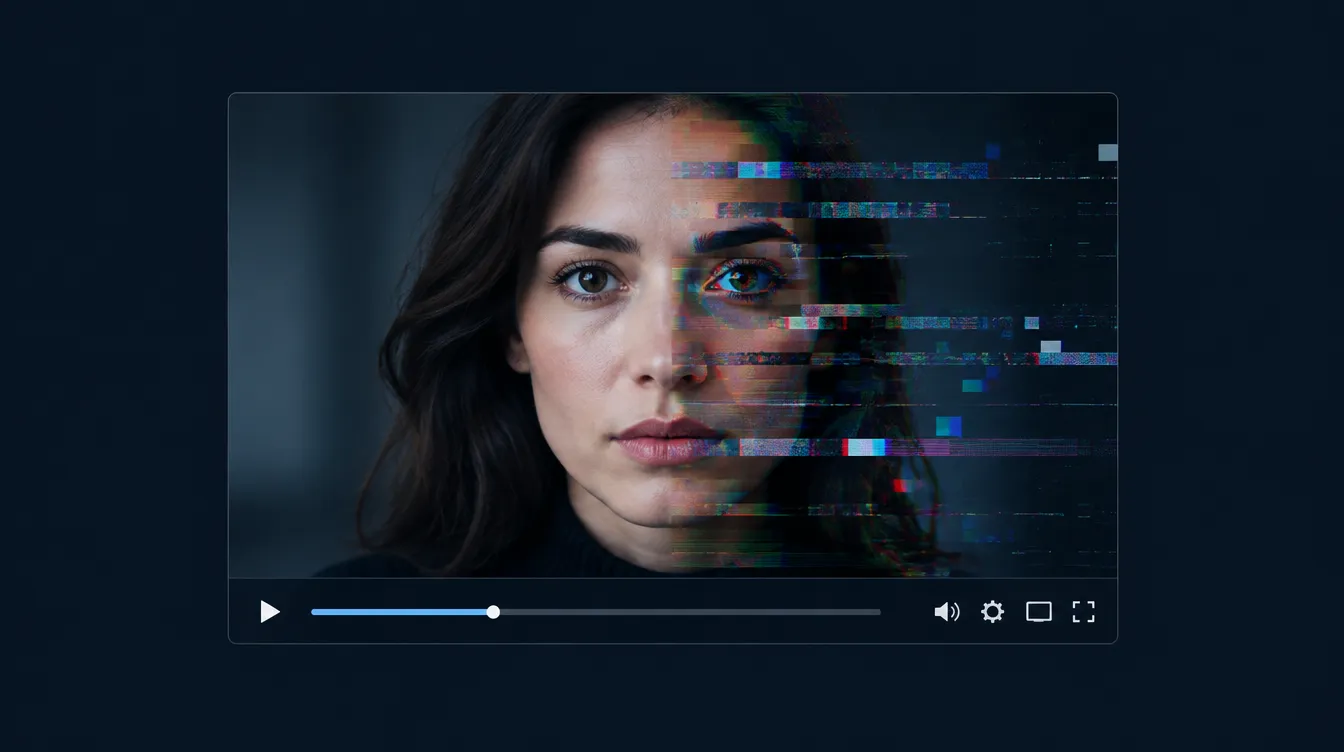
Real-time deepfake video has improved dramatically, but it is not perfect. Common artifacts include:
You do not need to be an expert to notice these. You just need to pay attention during video calls instead of being swept up in the conversation.
7. Their photos are perfect but untraceable
Reverse image search used to be the definitive catfish test. If the photo showed up on a stock site or someone else's Instagram, case closed. AI-generated photos break this test entirely because they are originals. They have never existed anywhere before.
Signs a profile photo may be AI-generated:
- Symmetry that looks too clean. Real faces are subtly asymmetrical.
- Background inconsistencies. Warped lines, blurred objects that should be sharp, or architectural details that make no geometric sense.
- Skin texture that looks airbrushed. Not filtered, but uniformly smooth in a way that removes all pores and blemishes.
- Earrings, collars, or necklines that do not match left to right.
When in doubt, do not rely on your eyes. Run it through Witness at witness.vision/scan — free, no account required. AI detection tools analyze patterns invisible to humans.
8. Their voice sounds natural but is only ever on their terms
AI voice cloning now requires as little as a few seconds of sample audio [3]. A scammer can clone the voice of the persona they are impersonating, or generate a consistent synthetic voice for a fabricated identity. The red flag is not the voice quality. It is the control: they call you, never the reverse. They have excuses when you call unexpectedly. Voice messages arrive but live, spontaneous phone conversations do not happen.
9. They send you "personal" photos that have no metadata
When someone takes a real photo with a phone and sends it, the file typically carries metadata: camera model, date, sometimes location. Photos generated by AI or heavily processed through editing tools often have metadata stripped or replaced. This is not proof of a scam on its own, since messaging apps sometimes strip metadata too. But combined with other red flags, it adds weight.
A Framework, Not a Checklist
No single red flag confirms a scam. Real people can be intense, can have complicated travel schedules, can have photos that look unusually good. The question is how many signals cluster together.
Three or more red flags from the list above, occurring with the same person, should shift your mindset from "getting to know someone" to "verifying someone."
Here is a practical verification sequence:
- Search their name and photos independently. Use multiple reverse image search engines, not just one.
- Check their photo for AI generation. Upload it to witness.vision/scan.
- Request a specific, spontaneous action on video. Ask them to hold up a specific number of fingers, or write your name on paper. Deepfake video struggles with unscripted physical tasks.
- Look for a digital footprint that predates your relationship. Social media accounts created in the last few months with little engagement history are a concern.
- Talk to someone you trust. Scammers rely on isolation. Describing the relationship to a friend or family member often surfaces patterns you have rationalized away.
Why Reporting Matters Even If You Feel Embarrassed
The FTC found that people aged 18 to 29 reported losing money to fraud more often than people over 70, though older adults lost larger amounts per incident [4]. Romance scams are not a sign of gullibility. They are engineered social attacks that exploit universal human needs for connection.
Reporting to the FTC at ReportFraud.ftc.gov and to the FBI's IC3 at ic3.gov helps law enforcement identify networks. It also helps platforms improve detection. Every unreported scam makes the next one easier for the scammer.
The Hardest Part
The most effective red flag detector is not a tool or a checklist. It is the willingness to question something that feels good. Scammers succeed because the experience of being wanted, valued, and understood is powerful enough to override skepticism.
That is not a weakness. It is human. The goal is not to become cynical about every person you meet online. It is to verify before you trust, especially before you send money, share personal documents, or make decisions that are hard to undo.
If something feels off about a photo, a video call, or a voice message, test it. Upload the image or audio to witness.vision/scan and get a straightforward answer. It takes less than a minute and costs nothing.
- [1]Federal Trade Commission, "Consumer Sentinel Network Data Book 2023," https://www.ftc.gov/reports/consumer-sentinel-network-data-book-2023
- [2]FBI Internet Crime Complaint Center, "2023 Internet Crime Report," https://www.ic3.gov/Media/PDF/AnnualReport/2023_IC3Report.pdf
- [3]Dan Goodin, Ars Technica, "AI voice cloning is getting dangerously good," https://arstechnica.com/security/2024/02/ai-voice-cloning/
- [4]Federal Trade Commission, "Who experiences scams? A story for all ages," https://www.ftc.gov/reports/consumer-protection-data-spotlight/data-spotlight-reports