What Is Insurance Fraud? Types, Examples and How AI Is Changing It
Insurance fraud costs the US about $308.6 billion a year. Hard vs soft fraud, the most common types, how AI-edited photos and documents are changing it, and how insurers catch it.
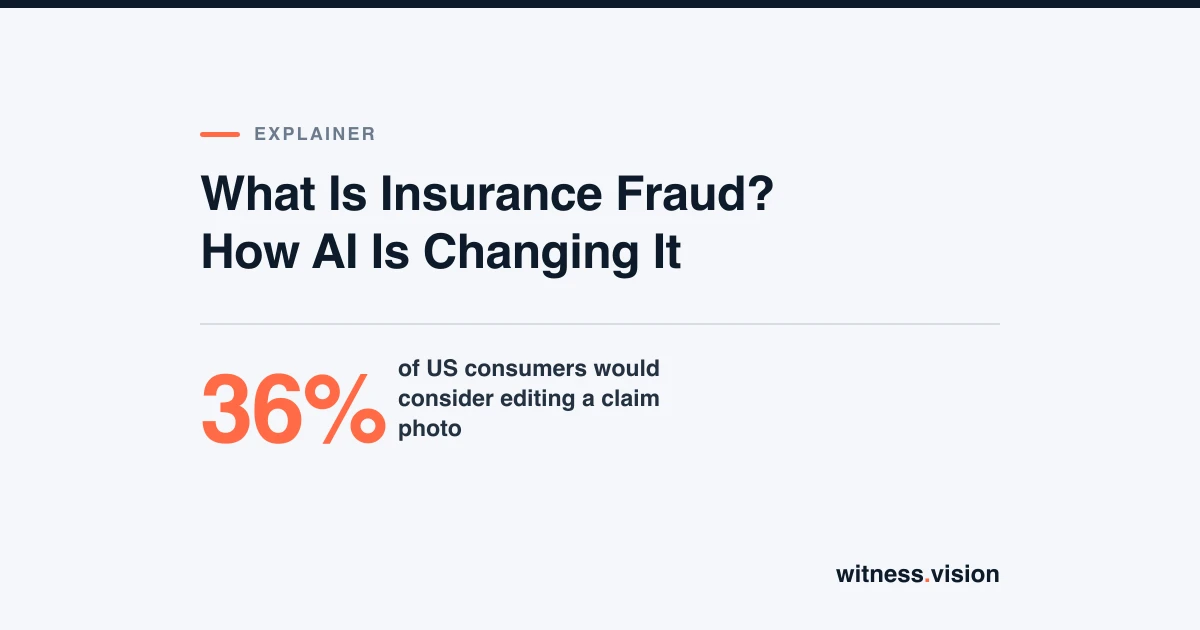
Insurance fraud is any deliberate deception to get a payment or benefit from an insurer that you aren't entitled to, or to pay less for coverage than you should. It is one of the most common financial crimes in the world. In the US alone it costs about $308.6 billion a year, according to the Coalition Against Insurance Fraud.[1]
Until recently, faking a claim took effort: staging an accident, forging a document by hand, finding a crooked repair shop. Generative AI has made the evidence itself cheap to fake. This guide covers the types of insurance fraud, real examples, how AI is changing it, and how insurers catch it.
Key Takeaways
- Insurance fraud ranges from padding a legitimate claim to organized rings staging accidents.
- It costs about $308.6 billion a year in the US, and fraud appears in roughly 10% of property and casualty losses.[1][2]
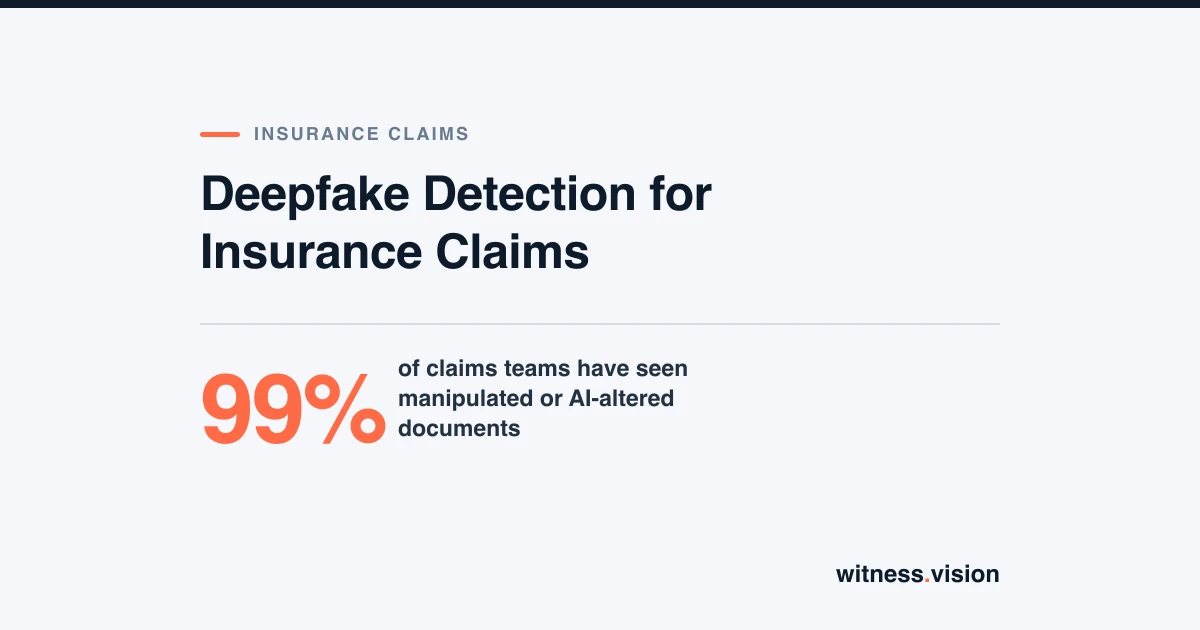
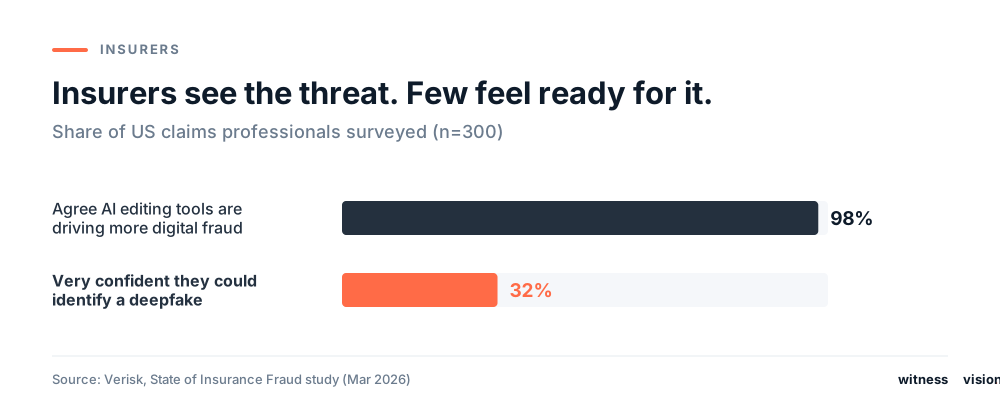
- AI now lets anyone edit damage photos, invoices and medical records in minutes. 98% of US insurers say AI editing tools are driving more fraud.[3]
- Honest policyholders pay for it through higher premiums.
Hard Fraud vs Soft Fraud
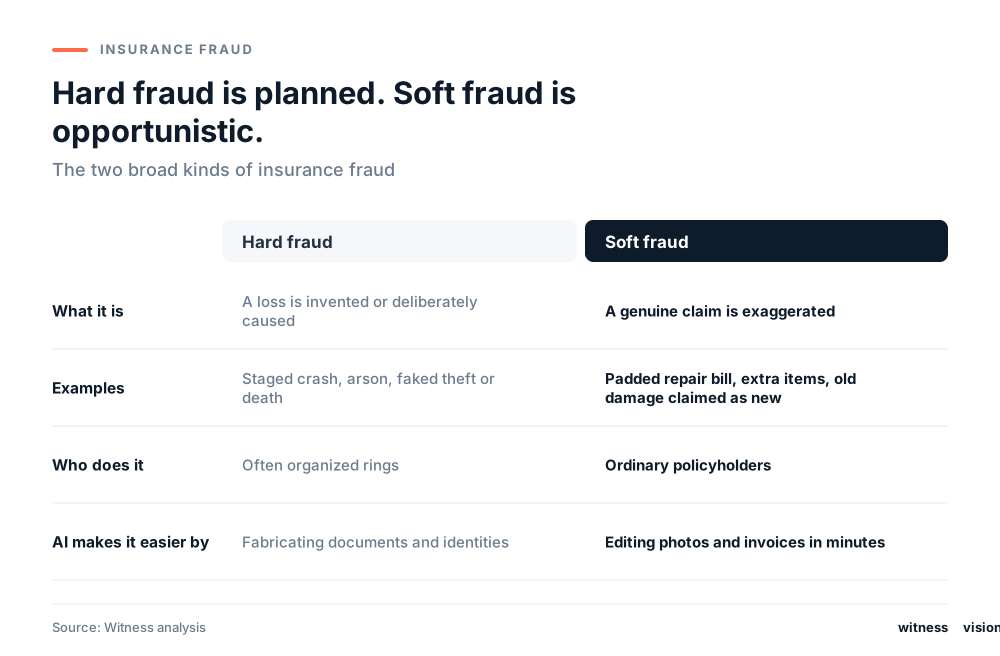
Hard fraud is planned: staging a car crash, setting fire to a property, inventing a theft, or faking a death.
Soft fraud, also called opportunistic fraud, happens when a genuine claim is exaggerated: adding items to a burglary claim, inflating a repair bill, or claiming old damage as new. It is far more common, and it is exactly the kind of fraud AI tools make easier.
Common Types of Insurance Fraud
Insurance Fraud by the Numbers
- United States: about $308.6 billion a year, including $45 billion in property and casualty and $34 billion in workers' compensation.[1]
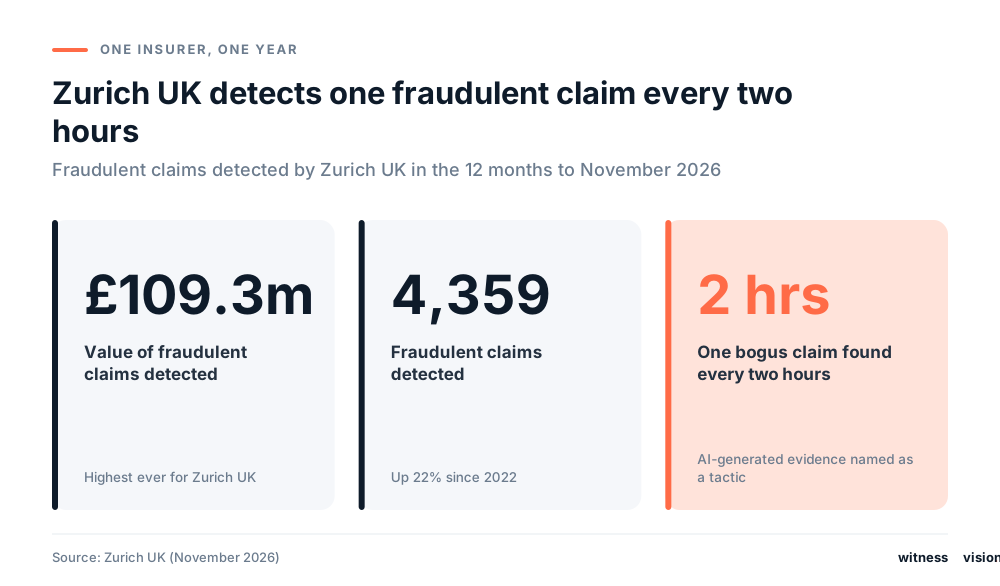
- United Kingdom: insurers detected £1.34 billion of fraudulent claims in 2025, up 14%.[4] Zurich UK alone detected 4,359 fraudulent claims worth £109.3 million in 12 months, one every two hours.[5]
See all the figures in our insurance fraud statistics report.
How AI Is Changing Insurance Fraud
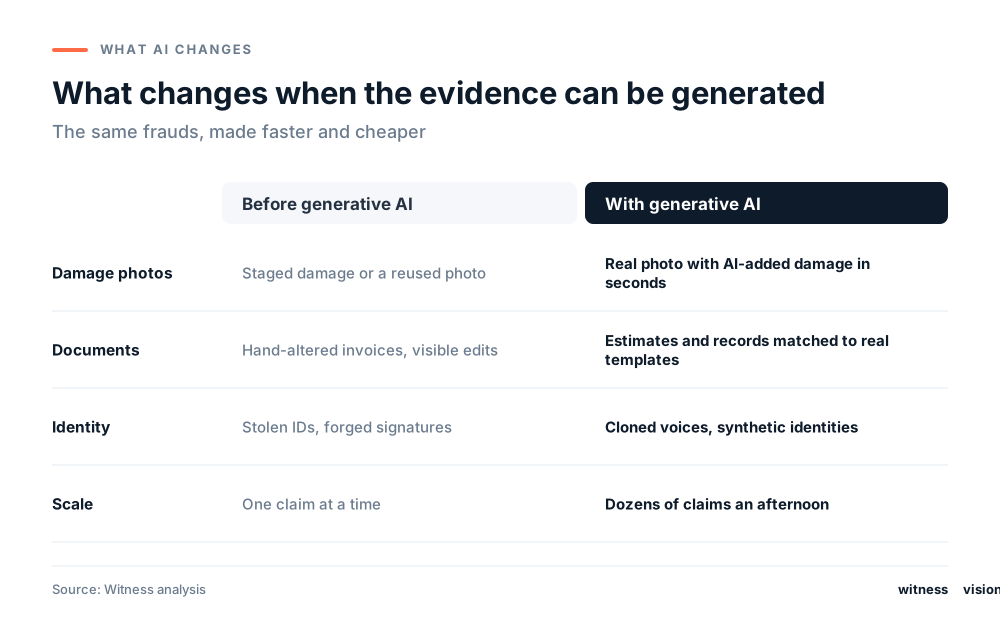
Edited damage photos
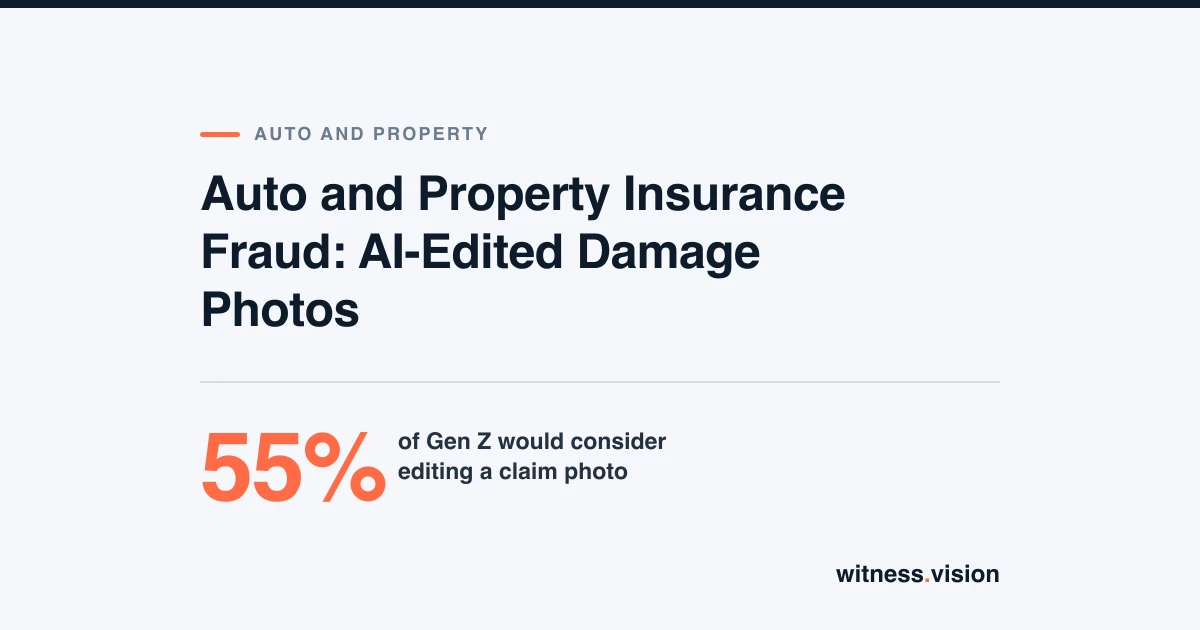
The most common AI fake is not a fully generated image. It is a real photo with fake damage added: a dent on a bumper, a crack in a windscreen, a water stain on a ceiling. Everything else in the image is genuine, which makes it convincing.
Fabricated documents
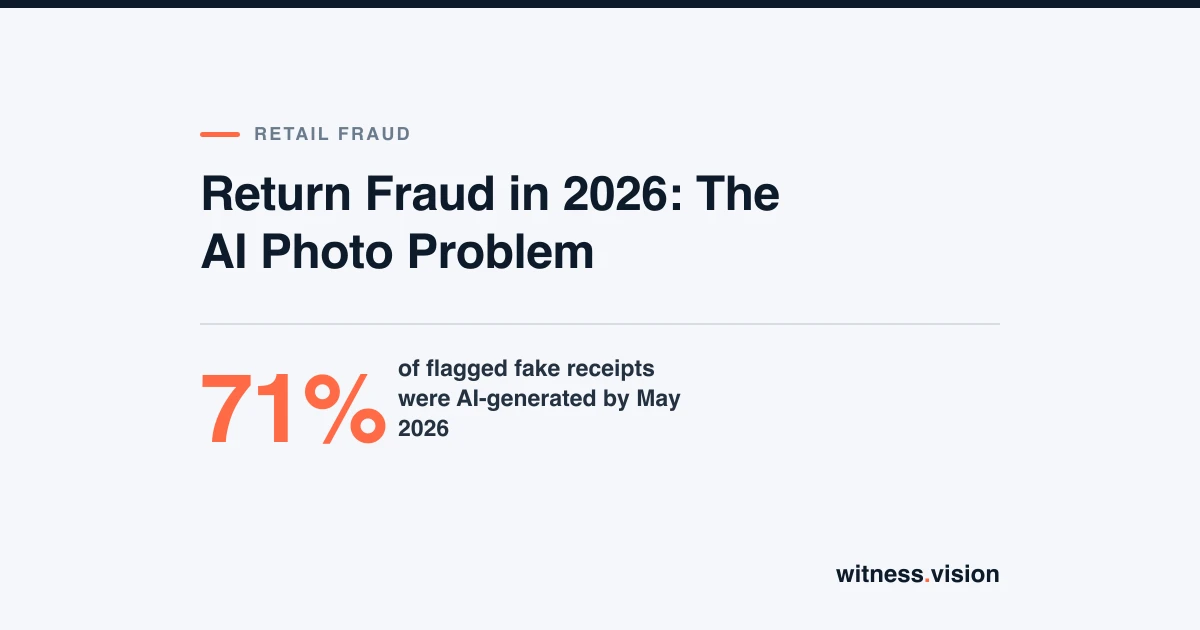
Repair estimates, invoices, receipts, medical records and police reports can be produced to match a real provider's layout, logo and fonts.
Cloned voices and video
A few seconds of audio is enough to clone a voice. Pindrop reports synthetic voice attacks on insurers rose 475% in 2024.[6] Fraudsters use cloned voices to change payment details or pass phone verification.
Why it's hard to catch
Most fraud tools check the data in a claim: dates, amounts, addresses, claim history. They don't check whether the photo or document itself is real. And people are poor at spotting AI images by eye: in a peer-reviewed study, they identified AI-generated faces at about chance level.[7]
UK insurers are already seeing it. Zurich UK names AI-generated documents and evidence among the tactics organized fraud networks now use.[5]
How Insurers Detect Fraud
- Rules and red flags: claims filed soon after a policy starts, repeated addresses, unusual amounts.
- Data and network analytics: linking claimants, vehicles, repair shops and bank accounts across claims to find rings.
- Special investigations units (SIU): trained investigators who review flagged claims.
- Industry databases: shared claims data and fraud registers.
- Media checks: analyzing photos, video and documents for signs of AI generation or editing. This is the newest layer, and the one most insurers are still adding.
A flag is a reason to look closer, not proof of fraud. Most flagged claims are honest, so good programs verify first with a new photo, a call or an inspection.
Is Insurance Fraud a Crime?
Yes. In the US, insurance fraud is a crime in every state, and many states treat it as a felony depending on the amount. Federal law can also apply. In the UK it is prosecuted under the Fraud Act 2006. Using AI to fake evidence doesn't change the legal picture.
How to Report Insurance Fraud
- US: your state's insurance fraud bureau or department of insurance, or the National Insurance Crime Bureau.
- UK: the Insurance Fraud Bureau's CheatLine.
- Your insurer: most have a dedicated fraud hotline.
How Witness Helps
Witness checks photos and video for signs of AI generation and editing. Each scan returns a clear verdict, Real or AI, with a confidence score and a plain-language explanation.
Check a claim photo or see Witness for insurance.
Frequently Asked Questions
What is insurance fraud?
Any deliberate deception to get a payment or benefit from an insurer you aren't entitled to, or to pay less for coverage than you should.
What are the most common types of insurance fraud?
Inflated claims, staged accidents, fake or edited evidence, premium fraud on applications, and medical billing fraud.
What is the difference between hard and soft insurance fraud?
Hard fraud is planned, like staging an accident. Soft fraud exaggerates a genuine claim, like inflating a repair bill.
How much does insurance fraud cost?
About $308.6 billion a year in the US, according to the Coalition Against Insurance Fraud.
How is AI used in insurance fraud?
To edit damage photos, fabricate invoices and medical records, and clone voices to change payment details or pass verification.
Related reading
- Insurance Fraud Statistics 2026
- Auto and Property Insurance Fraud: AI-Edited Damage Photos
- Deepfake Detection for Insurance Claims: Tools and Workflow
- [1]Coalition Against Insurance Fraud, The Impact of Insurance Fraud on the U.S. Economy, August 2022.
- [2]Coalition Against Insurance Fraud, Fraud Stats.
- [3]Verisk, AI Editing Tools Are Fueling a New Era of Insurance Fraud, March 17, 2026.
- [4]Association of British Insurers, Fraudsters target bigger payouts as insurers detect £1.34 billion of bogus claims, October 2026.
- [5]Zurich UK, Zurich detects £109m of fraud, November 5, 2026.
- [6]Pindrop, 2025 Voice Intelligence & Security Report, June 12, 2025.
- [7]Nightingale and Farid, AI-synthesized faces are indistinguishable from real faces and more trustworthy, PNAS, 2022.