Fake Profile Photos: How to Check If a Profile Is AI-Generated
AI-generated profile photos are flooding dating apps, LinkedIn, and social media. How to check if a profile photo is fake using free tools and visual inspection.

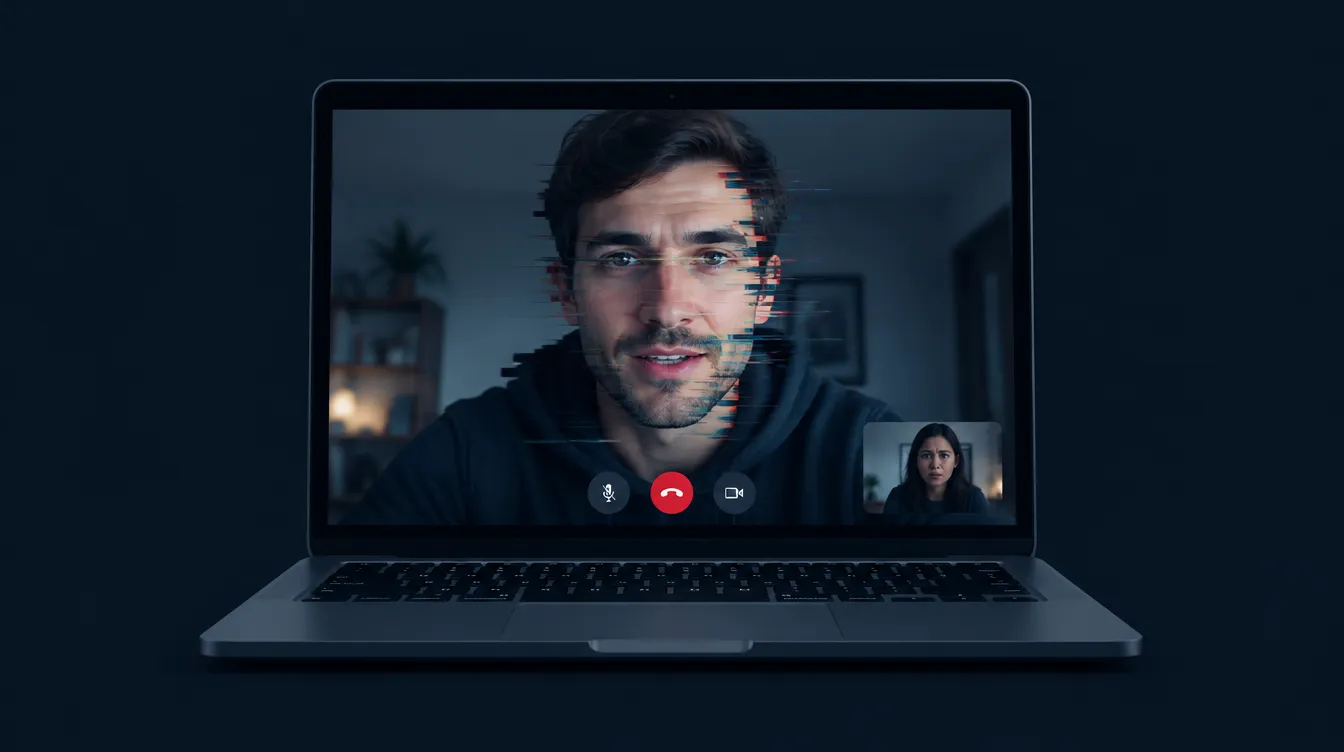
In 2024, researchers at Stanford and Georgetown estimated that over 50% of profiles on some dating platforms were either bots or scam accounts using fabricated identities [1]. AI-generated profile photos have made the problem dramatically worse, because the old verification methods no longer work. You cannot reverse-image search a face that has never existed before.
Fake profiles are not just a dating app problem. They appear on LinkedIn (used for phishing, corporate espionage, and fake job scams), Facebook and Instagram (driving engagement fraud, spreading disinformation, and building fake audiences), online marketplaces (used by fraudulent sellers and buyers), and even professional directories and review sites.
The cost is real. Romance scams alone accounted for $1.14 billion in reported losses in 2023 [2]. LinkedIn-based scams, including fake recruiter profiles used to harvest personal information, have been flagged by the FBI as a "significant threat" [3]. And those are just the scams where money changes hands. Fake profiles are also used for harassment, catfishing, political manipulation, and identity theft.
This guide covers why fake profiles exist, where they appear, how to spot them through both visual inspection and automated tools, and what to do when you find one.
Key Takeaways
- AI-generated profile photos are now indistinguishable from real photos to most people. Visual inspection alone is not reliable.
- Fake profiles appear across every major platform: dating apps, LinkedIn, social media, marketplaces, and review sites.
- The most reliable detection method combines visual checks, behavioral analysis, and automated AI detection tools.
- Reverse image search still catches stolen photos but fails completely against AI-generated faces.
- Free tools like Witness can analyze a profile photo for AI generation signals in seconds.
Why Fake Profiles Exist
Understanding motivation helps you recognize where fake profiles are most likely to appear and what they are trying to accomplish.
Financial fraud
This is the biggest category by dollar value. Fake profiles on dating apps, social media, and messaging platforms build trust over time, then extract money through romance scams, investment fraud, or fake emergencies. The profile photo exists to create an initial impression of attractiveness and trustworthiness.
Phishing and credential harvesting
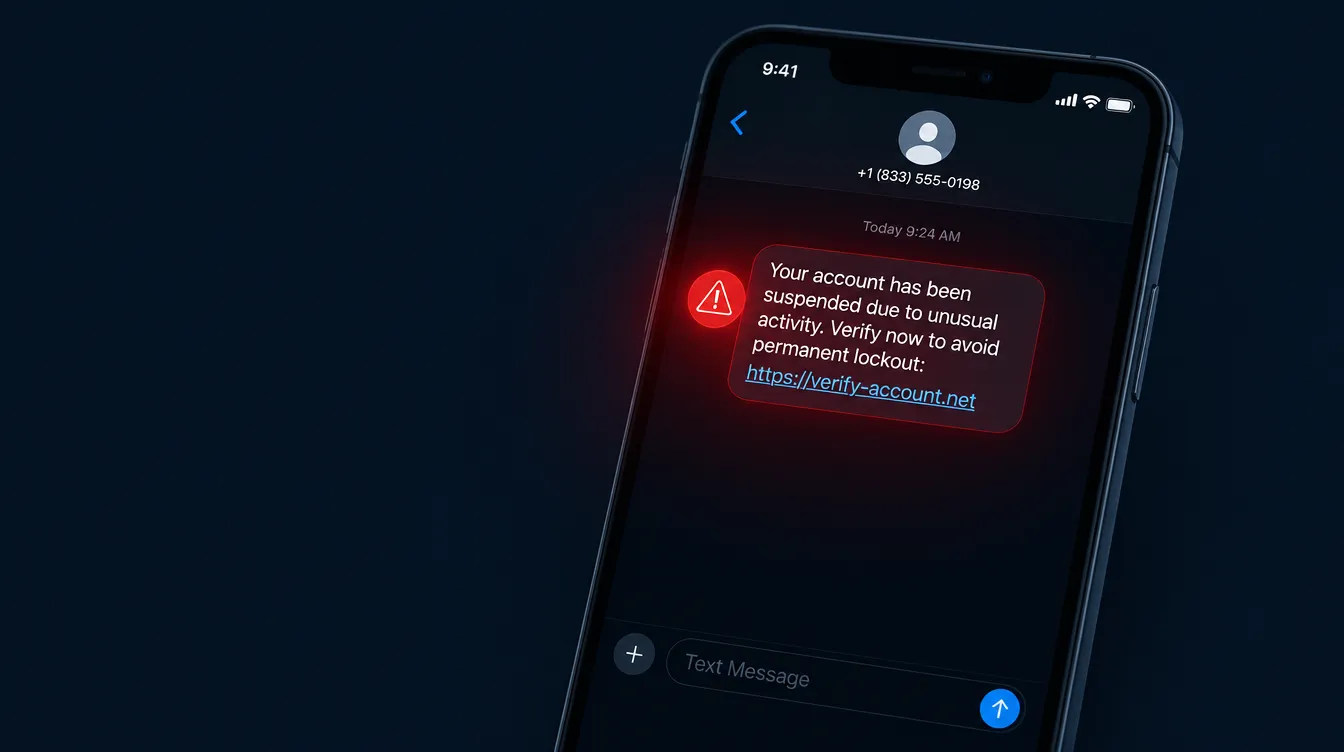
On LinkedIn, fake profiles pose as recruiters, industry peers, or potential clients. The goal is to get you to click a link, download a file, or share information. A 2022 investigation by the cybersecurity firm Mandiant found networks of hundreds of fake LinkedIn profiles operating coordinated campaigns targeting specific industries [4].
Engagement fraud
Businesses and individuals buy followers, likes, and comments from networks of fake accounts. These accounts need profile photos that look real enough to pass casual inspection. AI generators produce unlimited unique faces at near-zero cost, making this industry vastly more scalable than the days of stolen photos.
Disinformation and influence operations
State actors and political groups create fake personas to spread narratives, amplify content, and create the illusion of grassroots support. The Stanford Internet Observatory has documented numerous campaigns using AI-generated profile photos across Facebook, Twitter/X, and Instagram [5].
Harassment and impersonation
Fake profiles are created to impersonate real people (for defamation or fraud), to catfish (for emotional manipulation), or to stalk and harass while maintaining anonymity.
Where Fake Profiles Show Up
Dating apps (Tinder, Bumble, Hinge, etc.)
Dating apps are the highest-stakes environment for fake profiles because users are specifically looking to trust strangers. The incentive structure is perfect for scammers: people want to believe the attractive, interesting person who matched with them is real.
Red flags specific to dating:
- Profile was created very recently
- Photos look professional but the person claims not to be a model or public figure
- Conversation moves off the platform unusually fast
- They suggest WhatsApp, Telegram, or text within the first few messages
LinkedIn fake profiles are particularly dangerous because they exploit professional trust. A connection request from someone at a reputable company feels like networking, not a threat.
Red flags specific to LinkedIn:
- Profile has very few connections (under 50) despite claiming years of experience
- Work history includes real companies but the person does not appear in those companies' actual employee directories
- Profile photo looks polished but does not appear in any image search results
- They send a link or attachment early in the conversation
Facebook and Instagram
Fake accounts on Meta platforms serve multiple purposes: driving engagement for pages and groups, operating scam campaigns, spreading disinformation, and catfishing.
Red flags specific to social media:
- Account was created recently but has a large follower count
- Posts are sparse, generic, or entirely reshared content
- Comments and likes come from other accounts that also look fake
- No tagged photos from other users
Online marketplaces (eBay, Facebook Marketplace, Craigslist)
Fake seller and buyer profiles use AI-generated photos to appear trustworthy. The scam may involve collecting payment for items that do not exist, sending counterfeit goods, or harvesting payment information.
How to Check a Profile Photo: Visual Inspection
AI image generators have improved enormously, but they still produce artifacts that a careful observer can catch. None of these signs is definitive on its own. Look for clusters.
Symmetry
Real human faces are asymmetrical. One eye is slightly higher, one ear slightly different, the jawline not quite even. AI-generated faces often exhibit unnaturally precise symmetry, especially in early-generation models. Newer models have improved here, but perfect symmetry is still more common in generated faces than real ones.
Background inconsistencies
This is one of the most reliable visual tells. Look behind the person:
- Straight lines that bend or warp (doorframes, shelves, railings)
- Objects that fade into nonsensical blurs
- Text or signage that is garbled or unreadable
- Architectural elements that make no geometric sense
AI models prioritize the face. The background often receives less attention and accumulates errors.
Hair boundaries
The transition between hair and background is computationally difficult. Look for:
- Hair that merges into the background unnaturally
- Individual strands that disappear or appear from nowhere
- Hair texture that shifts from detailed to smooth within the same area
Earrings, glasses, and accessories
Asymmetrical rendering of paired accessories is a common tell. One earring may differ from the other. Glasses frames may not be consistent from left to right. Collars, necklines, and clothing near the face boundary sometimes show inconsistencies.
Teeth and eyes
- Teeth may appear blurred, fused, or inconsistent in number
- Eyes may have different shapes, colors, or reflections
- The light reflections in each eye should match (same position, same shape) because both eyes are seeing the same light source. Mismatched reflections suggest generation.
Skin texture
AI-generated faces often have skin that is too smooth. Not filtered-looking, but uniformly free of pores, small blemishes, fine lines, and the subtle texture variations that real skin has. This is especially noticeable in high-resolution images.
How to Check a Profile Photo: Automated Tools
Visual inspection has a ceiling. Studies have found that even trained observers correctly identify AI-generated faces only about 50 to 60% of the time when the images are high quality [6]. That is barely better than flipping a coin.
Automated tools analyze patterns that humans literally cannot see: frequency domain artifacts, compression signatures, generative model fingerprints, and statistical anomalies in pixel distributions. They are not perfect either, but they catch things your eyes will miss.
Using Witness
The fastest way to check a suspicious profile photo:
- Right-click the profile photo and save it, or take a screenshot
- Go to witness.vision/scan and upload the image
- Read the result. Witness will tell you whether the image shows signs of AI generation or manipulation
The check is free, requires no account, and typically takes a few seconds.
If you are checking profiles in your browser (on LinkedIn, Facebook, or a dating site's web version), the Witness Chrome extension lets you analyze images directly on the page without downloading them first.
Reverse image search
Reverse image search (Google Images, TinEye, Yandex) remains useful for catching stolen photos. If someone's profile picture belongs to an Instagram influencer in another country, the search will surface it.
But reverse image search tells you nothing about AI-generated faces because they are originals. They have never been posted anywhere before. A clean reverse image search result does not mean the photo is real. It only means it has not been used elsewhere.
Metadata analysis
Photos taken with phone cameras carry EXIF metadata: camera model, date, GPS coordinates, and other technical information. AI-generated images typically lack this metadata, or contain metadata that does not match what a real camera would produce.
However, many platforms strip metadata when photos are uploaded. A missing EXIF record on a Tinder photo does not prove anything because Tinder strips it from all uploads. Metadata is more useful when someone sends you a photo directly through a messaging app that preserves it.
Beyond the Photo: Behavioral Checks
A fake profile is more than a fake photo. The behavior of the account often reveals more than the image.
Account age and history
Real people have digital histories that build up over time. Look for:
- When was the account created?
- Are there posts, check-ins, or activity going back months or years?
- Are there tagged photos from other people? (These are much harder to fake.)
- Do their connections/friends look real and varied?
Engagement patterns
Fake accounts tend to have engagement that comes from other fake accounts. Look at who likes and comments on their posts. If those accounts also look sparse and recently created, you may be looking at a coordinated network.
Conversational behavior
In direct messages, fake profiles (whether human-operated or bot-driven) often show patterns:
- Responses that are slightly off-topic or generic
- Reluctance to answer specific personal questions
- Steering the conversation toward a link, a platform switch, or a request
- Copying language patterns from your messages (a sign of LLM-generated replies)
What to Do When You Find a Fake Profile
- Do not engage further. If you have been interacting with the profile, stop. Do not confront them, because this alerts the operator and they will simply delete the account and create a new one.
- Report the profile. Every major platform has a reporting mechanism for fake accounts. Use it. These reports feed into the platform's detection systems and help protect other users.
- Warn others if appropriate. If the fake profile has been interacting with people you know, consider alerting them privately.
- Document everything. Take screenshots of the profile, the conversation, and any photos or links they sent. If this escalates to a fraud report, you will need evidence.
- If money was exchanged, act immediately. Contact your bank. File a report with the FTC at ReportFraud.ftc.gov and the FBI's IC3 at ic3.gov.
The Verification Habit
The best defense against fake profiles is not a single tool or a single technique. It is the habit of verification. Before you trust a stranger online, check their photo. Look at their account history. Search for them independently. Ask yourself whether their behavior makes sense.
This does not mean treating every new connection with suspicion. It means spending 60 seconds on basic checks before you invest time, emotion, or money in someone you have only met through a screen.
Start with the photo. Upload it to Witness. If the face was generated by AI, you will know before the conversation goes any further.
- [1]Stanford Internet Observatory and Georgetown University, "Combating Online Manipulation: Platform Responses to Inauthentic Behavior," 2024
- [2]Federal Trade Commission, "Romance scammers' favorite lies exposed," February 2024, https://www.ftc.gov/news-events/data-visualizations/data-spotlight/2024/02/romance-scammers-favorite-lies-exposed
- [3]FBI, "FBI Warns of Fraudulent Schemes Leveraging Cryptocurrency ATMs and QR Codes," https://www.ic3.gov/Media/Y2024/PSA240102
- [4]Mandiant, "Suspected Pro-PRC Influence Operation Expands to Dozens of Social Media Platforms," 2022, https://www.mandiant.com/resources/reports/pro-prc-influence-operation
- [5]Stanford Internet Observatory, "Renée DiResta et al., Potemkin Pages & Personas," 2023, https://cyber.fsi.stanford.edu/io/publication
- [6]Nightingale, S.J. and Farid, H., "AI-synthesized faces are indistinguishable from real faces and more trustworthy," PNAS, 2022, https://www.pnas.org/doi/10.1073/pnas.2120481119